
The public Jack the Ripper walking tour currently starts from £22 per person. The final price can vary by date, ticket type or booking selection, so check the live calendar on the tour page before paying. The booking flow shows the applicable price and availability for your chosen departure. Private, corporate and school bookings are quoted separately according to the group’s requirements.
The Whitechapel knowledge base
Jack the Ripper Tour Questions, Answered
Fifty carefully researched answers covering tour planning, Whitechapel history, suspects, victims and the places connected to the case.
Browse the questionsSome London operators advertise tip-based “free” walking tours, where there is no fixed ticket price but guests are expected to tip the guide afterwards. Jack the Ripper Tours is a paid experience, with public tickets currently starting from £22. A fixed-price tour gives you a confirmed booking and clearly stated cancellation terms; compare route, group size, guide quality and verified reviews rather than price alone.
The public Jack the Ripper walking tour lasts approximately two hours. It covers about 1.5 miles through Whitechapel and nearby streets at a gentle pace, with regular stops for the guide’s commentary and historical context. Allow a little extra time around the advertised finish in case the group moves more slowly, and avoid making a tightly timed reservation immediately afterwards.
The meeting point is outside St Mary’s Whitechapel Church Memorial, London E1 1FE. Look for the guide with a green umbrella; the contact page may also describe a green Side Routes flag or sign. Please arrive 10 minutes before the scheduled start so the group can check in and leave on time. See the latest meeting instructions on the contact page.
Aldgate East is the nearest Tube station to the meeting point outside St Mary’s Whitechapel Church Memorial. Use the exit for Whitechapel High Street and allow extra time to find the memorial, as station exits and engineering works can affect the route. Check a live journey planner before travelling and aim to arrive at least 10 minutes before the tour starts.
The public Jack the Ripper tour is advertised for 7:30pm each evening. Please arrive at the meeting point 10 minutes early and look for the guide’s green umbrella outside St Mary’s Whitechapel Church Memorial. Your booking confirmation is the best reference for your specific departure, particularly if you have arranged a private or school tour, as those experiences may use separately agreed timings.
Advance online booking is recommended because places are subject to availability and tours can sell out, particularly at busy times. Booking through the website confirms your place and sends an e-ticket by email. If your preferred date matters, do not rely on turning up without a reservation. Check the live calendar on the tour page and book the departure that suits you.
Same-day online booking may be possible when the live booking calendar still shows spaces, but availability is not guaranteed. The website does not promise walk-up ticket sales at the meeting point, so the safest option is to book online before travelling. You should receive an e-ticket by email and can normally show it on your phone. If the booking system is unclear, use the contact page.
The public tour is promoted as running every evening at 7:30pm. However, a general schedule is not the same as guaranteed availability for every Sunday, bank holiday or individual date. Check the live booking calendar for the day you want before making travel plans. Private and school tours follow separately arranged availability, so contact the team if your group needs a particular date or time.
Yes, the walking tour normally runs in rain and other typical London weather, so bring a waterproof jacket or umbrella and wear suitable footwear. If severe weather or another safety issue forces the operator to cancel, the terms state that a full refund will be provided. Watch for messages about your booking and check the cancellation policy if conditions are unusually disruptive.
You may cancel free of charge up to 24 hours before the scheduled departure and receive a full refund. Cancellations within 24 hours are normally non-refundable, although exceptional circumstances may be considered at the operator’s discretion with supporting documentation. If the operator cancels, you receive a full refund. Date or time changes must also be requested more than 24 hours ahead and remain subject to availability. Read the full policy.
Yes. A private Jack the Ripper tour is available for groups wanting a more personalised experience. The public site says private tours can be tailored to a group’s interests, with timing and availability arranged separately. Because pricing depends on the booking, use the private-tour enquiry form or contact the team with your preferred date, group size and any specific requirements.
Yes. The site advertises private events, corporate groups and dedicated educational visits. Schools can view the Jack the Ripper school tour, while other groups can use the private-tour page. Published pages describe tailored content and flexible arrangements, but dates, group capacity, prices and any educational support should be confirmed directly before you commit to transport or other plans.
The public Jack the Ripper Tours website does not currently advertise gift vouchers, so it would be misleading to promise that they are available. If you want to buy the experience for someone else, contact the team before purchasing and ask what options can be supported. Do not assume a standard tour ticket is transferable or suitable as a voucher unless the booking terms confirm it.
The website does not publish a guaranteed direct-booking discount or promise that its price will always beat GetYourGuide, Viator or another reseller. Prices, fees, currencies and cancellation terms can differ by channel and date. Compare the final checkout total and conditions on the same day. Booking on the official site gives you the operator’s displayed terms, but it should not be described as cheaper unless the live prices prove it.
It is likely to suit visitors who enjoy London history, unsolved cases and guided storytelling. The experience combines an approximately two-hour Whitechapel walk with historical locations, evidence and context about the victims and Victorian East End. Value is personal, so consider the subject matter, walking distance and evening timing before booking. You can also read verified guest reviews and the full guide.
There is no single “best” tour for every visitor. Compare factual accuracy, respect for the victims, guide quality, group size, route, duration, accessibility and cancellation terms. Small groups can make it easier to hear and ask questions, while verified reviews show how recent guests experienced the guide and storytelling. Jack the Ripper Tours publishes its practical details and guest feedback, so review those against competing tours before choosing.
The tour is recommended for ages 12 and over because it deals with real murders and mature historical themes. The presentation is described as factual and historically focused rather than gratuitously graphic, but the subject remains dark and some children may find it upsetting. There is no substitute for parental or teacher judgement. For organised education groups, review the dedicated school-tour information and discuss age-specific needs in advance.
The subject matter is inherently disturbing because the tour discusses real murders, their investigation and the lives of the victims. The site describes the presentation as factual, historically focused and respectful rather than gratuitously graphic. Historical images or case material may still be uncomfortable for some guests, which is why the recommended age is 12+. If you have particular sensitivities, contact the team before booking for a clearer explanation of the current content.
The route includes cobbled streets and narrow alleyways, which can be challenging for wheelchair users and people with pushchairs. The site does not describe the public route as fully step-free or guarantee suitability for every mobility aid. Contact the team before booking with the dimensions and assistance needs that matter to you. They can explain the current route and whether reasonable adjustments or a private arrangement may be possible.
The public tour covers approximately 1.5 miles over about two hours. It moves at a gentle pace and includes regular stops while the guide explains locations and evidence, so it is not a continuous brisk walk. Nevertheless, guests should expect to remain on their feet outdoors and encounter cobbles or narrow streets. Wear comfortable shoes and contact the team beforehand if distance, standing time or uneven surfaces may be difficult.
Whitechapel is a busy part of central East London, but no urban area can be described as risk-free. The tour takes place as an organised evening group with a guide. Use normal London precautions: keep valuables secure, stay with the group, follow the guide’s instructions and plan your journey home before departure. If travelling alone, share your plans and use well-lit routes to and from the meeting point.
The public site describes the guides as Ripper enthusiasts, knowledgeable storytellers and, on tour pages, expert guides. Guest reviews name individual guides and often praise their historical knowledge and respectful delivery. However, the site does not publish a formal “Ripperologist” qualification or a verified credential for every guide, so that title should not be assumed. Read recent verified reviews for guest experiences with the current team.
It is presented as a history-led walking tour about the Whitechapel murders, the investigation, the victims and Victorian East End life. Atmospheric storytelling and an eerie evening setting are part of the experience, but the public description focuses on historical facts, case evidence and respected theories rather than paranormal investigation. If you specifically want ghosts or supernatural claims, this is not how the tour is currently described on the official site.
Wear comfortable walking shoes suitable for roughly 1.5 miles, including cobbles and narrow streets. Dress for the forecast and bring a waterproof jacket or umbrella if rain is possible, as the tour normally runs in typical London weather. In colder months, layers are sensible because you will spend about two hours outdoors with frequent stops. Bring your e-ticket on your phone and arrive 10 minutes early.
The Ten Bells in Spitalfields is the pub most famously associated with the Jack the Ripper story and with women connected to the case. However, the current public-tour information does not promise entry to the pub or list it as a guaranteed stop, so do not plan on a visit being included. Routes can change. Read the Ten Bells guide for historical context.
The standard public tour is currently advertised for 7:30pm every evening; the site does not advertise a regular daytime public departure. The private-tour page says multiple departure times may be available, but it does not guarantee daytime slots on every date. If an evening tour does not suit you, use the contact page to ask about a private arrangement before making other plans.
You can explore public streets independently, but the website does not currently advertise a bookable self-guided tour product. A self-guided visit also requires care: some historic sites have changed or disappeared, and modern locations may only approximate the 1888 setting. The murder-sites guide can provide background, while a guided tour adds route planning, evidence, context and live questions.
Jack the Ripper was the name given to an unidentified killer associated with a series of murders in Whitechapel and Spitalfields in 1888. Five women are traditionally grouped as the canonical victims, although the surviving evidence cannot prove that one person committed every crime. The murderer was never identified or charged. Responsible history therefore treats “Jack the Ripper” as a label for an unsolved case, not as a person whose name or background is known.
No one knows Jack the Ripper’s real name. Contemporary police investigated numerous men, and later writers have proposed many more, but no surviving document, witness identification or forensic result proves any suspect was the killer. Names such as Aaron Kosminski, Montague John Druitt and George Chapman belong to competing theories, not solved history. Claims that the case has been conclusively cracked should be tested against the quality, provenance and limitations of the evidence.
The five canonical murders occurred between 31 August and 9 November 1888, during what is often called the “autumn of terror”. They took place in or near Whitechapel in London’s East End. The wider Whitechapel murders police file covered other killings over a longer period, but historians do not agree that those crimes had the same perpetrator. Our Jack the Ripper timeline sets the principal events in chronological order.
Five deaths are most commonly attributed to Jack the Ripper: the murders of Mary Ann Nichols, Annie Chapman, Elizabeth Stride, Catherine Eddowes and Mary Jane Kelly. They are known as the canonical five. Other Whitechapel murders have sometimes been added to the total, but the evidence is insufficient to connect them confidently to the same offender. The historically responsible answer is therefore five commonly accepted victims, with the killer’s exact total unknown.
The canonical five were Mary Ann “Polly” Nichols, Annie Chapman, Elizabeth Stride, Catherine Eddowes and Mary Jane Kelly. They were killed between 31 August and 9 November 1888. The term “canonical” reflects a later historical consensus that their murders were probably connected; it is not proof that every case had the same perpetrator. Each woman had a life, family relationships and experiences beyond the circumstances of her death, explored in our guide to the victims’ lives in Whitechapel.
No single failure explains why Jack the Ripper was never caught. Detectives faced crowded streets, a mobile lodging-house population, uncertain witness accounts and offences split between Metropolitan and City of London Police jurisdictions. Modern crime-scene safeguards, fingerprint identification, DNA profiling, CCTV and digital records did not exist. Police interviewed many people and followed extensive leads, but obtained no decisive evidence linking one suspect to the murders. Read more about why the investigation remained unsolved.
Frequently discussed suspects include Aaron Kosminski, Montague John Druitt and Michael Ostrog, all named in an 1894 memorandum by senior police officer Melville Macnaghten. Later attention has also focused on Severin Kłosowski, known as George Chapman, and Francis Tumblety, among many others. The evidence against each is incomplete, disputed or partly retrospective, and no suspect was charged with the canonical murders. Our suspects guide separates contemporary records from later theory.
There is disputed DNA research involving a shawl said to have come from Catherine Eddowes’s murder scene. Researchers reported mitochondrial DNA links to descendants of Eddowes and suspect Aaron Kosminski, but the shawl’s provenance is uncertain, contamination across more than a century is a serious concern, and mitochondrial DNA cannot uniquely identify one person. The journal later issued an expression of concern and a correction relating to the study. It does not prove that Kosminski, or anyone else, was Jack the Ripper.
There is no confirmed survivor of an attack by Jack the Ripper. All five canonical victims died. Other women survived assaults in Whitechapel during the broader period, and some later accounts have suggested that the same offender attacked them, but those links cannot be established from the surviving evidence. Because the killer was never identified, historians cannot reliably assign every local assault to him. “Ripper survivor” stories should therefore be presented as possibilities or later theories, not settled fact.
No one can be shown to have almost caught Jack the Ripper. Israel Schwartz reported seeing a man assaulting a woman believed to be Elizabeth Stride shortly before her body was found. Louis Diemschutz then entered Dutfield’s Yard and may have disturbed her killer, but that interpretation is unproven. Other witnesses saw men with victims near relevant times, yet their descriptions varied and none produced a secure identification. Any claim that one named person narrowly missed catching the killer remains a reconstruction.
The investigation produced crime-scene observations, medical evidence and several uncertain witness descriptions, but no clue that securely identified the killer. After Catherine Eddowes’s murder, part of her apron was found in Goulston Street near chalk writing whose connection to the crime was never proved. Police also received hundreds of letters, including “Dear Boss” and “From Hell”, yet there is no strong evidence that any came from the murderer. No authenticated weapon, usable fingerprint or uncontaminated DNA sample securely linked to the killer survives.
The name appeared in the “Dear Boss” letter sent to the Central News Agency in late September 1888 and signed “Jack the Ripper”. After the police circulated copies, newspapers repeated the striking signature and it became the enduring label for the unidentified Whitechapel murderer. The letter may have been a journalistic or public hoax; it was one of hundreds received during the investigation, and no strong evidence proves the killer wrote it. See the history of the “Dear Boss” letter.
A comparable offender would be more likely to be identified today, but capture would not be guaranteed. CCTV, phone and travel data, rapid information-sharing, preserved crime scenes, fingerprint databases and modern DNA profiling can connect people, places and offences far more effectively than Victorian methods. Even modern investigations can fail when evidence is absent, degraded or misleading. Nor can present-day science simply solve the 1888 case: the original scenes are gone, exhibits have uncertain histories, and contamination limits what surviving material can prove.
Whitechapel in 1888 was densely populated, economically unequal and shaped by insecure work, overcrowded housing and common lodging houses. Many residents faced severe poverty, while migrants from Ireland and continental Europe, including a substantial Jewish community, made the district culturally diverse. It was also a busy place of markets, workshops, charities, transport and everyday family life—not simply the lawless, permanently foggy slum of later fiction. Explore the wider context in our guide to Whitechapel in 1888.
No proven link connects the Ripper murders with the Thames Torso murders, a separate series in which dismembered human remains were discovered in and around London during the late 1880s. Their overlapping dates and some anatomical mutilation have encouraged theories of one offender. However, the torso cases involved extensive dismemberment, removal and disposal of bodies, unlike the street or room attacks associated with the canonical five. Contemporary police generally treated them as separate sets of crimes; a shared killer remains a hypothesis, not established history.
Dorset Street in Spitalfields is probably the street most famously associated with Jack the Ripper. Mary Jane Kelly was killed in Miller’s Court, reached from Dorset Street, in November 1888. The street was later renamed Duval Street and then removed during redevelopment, so no original crime scene survives there. Commercial Street is the clearest modern landmark nearby. See our map of the murder sites today.
Yes, you can visit the historic locations, but they are sites rather than preserved Victorian crime scenes. Mitre Square remains a public square, Buck’s Row is now Durward Street and Berner Street is now Henriques Street; other yards and buildings were demolished. Our evening walking tour helps interpret the changed streetscape, while our murder-sites guide explains what remains. Please visit respectfully and avoid private property.
The canonical five locations are: Mary Ann Nichols—Buck’s Row, now redeveloped Durward Street; Annie Chapman—the rear yard of 29 Hanbury Street, whose building is gone; Elizabeth Stride—Dutfield’s Yard off Berner Street, now Henriques Street, with the yard demolished; Catherine Eddowes—Mitre Square, still a public square but substantially rebuilt; and Mary Jane Kelly—13 Miller’s Court off Dorset Street, now beneath modern redevelopment. Explore them on our modern locations map.
Yes. The Jack the Ripper Museum is at 12 Cable Street, London E1 8JG, close to Aldgate East station. Its official website currently lists daily opening from 9.30am to 6pm. The museum is a separate attraction from the Jack the Ripper Tours evening walking tour on this website, so check and book each independently. Opening times can change, particularly around holidays, so confirm them directly with the museum before travelling.
No, the Jack the Ripper Museum is a paid attraction. Its official website currently lists adult admission at £12 online or £14 on the door, with tickets for children aged 8–16 and pensioners at £10. These are museum entry prices, not tickets for the evening walking tour offered on this website. Check the museum’s own website before travelling because prices, concessions and opening arrangements can change.
Because the public tour starts at 7.30pm and lasts about two hours, most galleries and markets will be closed afterwards. For a late evening, head towards Brick Lane or Spitalfields for food, or visit a historic pub such as the Ten Bells, checking current opening times first. Earlier that day or the next morning, consider Whitechapel Gallery, Old Spitalfields Market, Brick Lane’s street art and the neighbourhood’s independent shops.
The tour runs every evening at 7.30pm, so the best time depends on your priorities. September to November offers a suitably atmospheric East End, but October and Halloween dates are usually busiest, so book early. Winter provides the darkest streets but can be cold and wet; spring is often milder and quieter. Summer evenings are comfortable, although sunset is later. Whatever the season, wear suitable shoes, check the forecast and bring a waterproof layer.
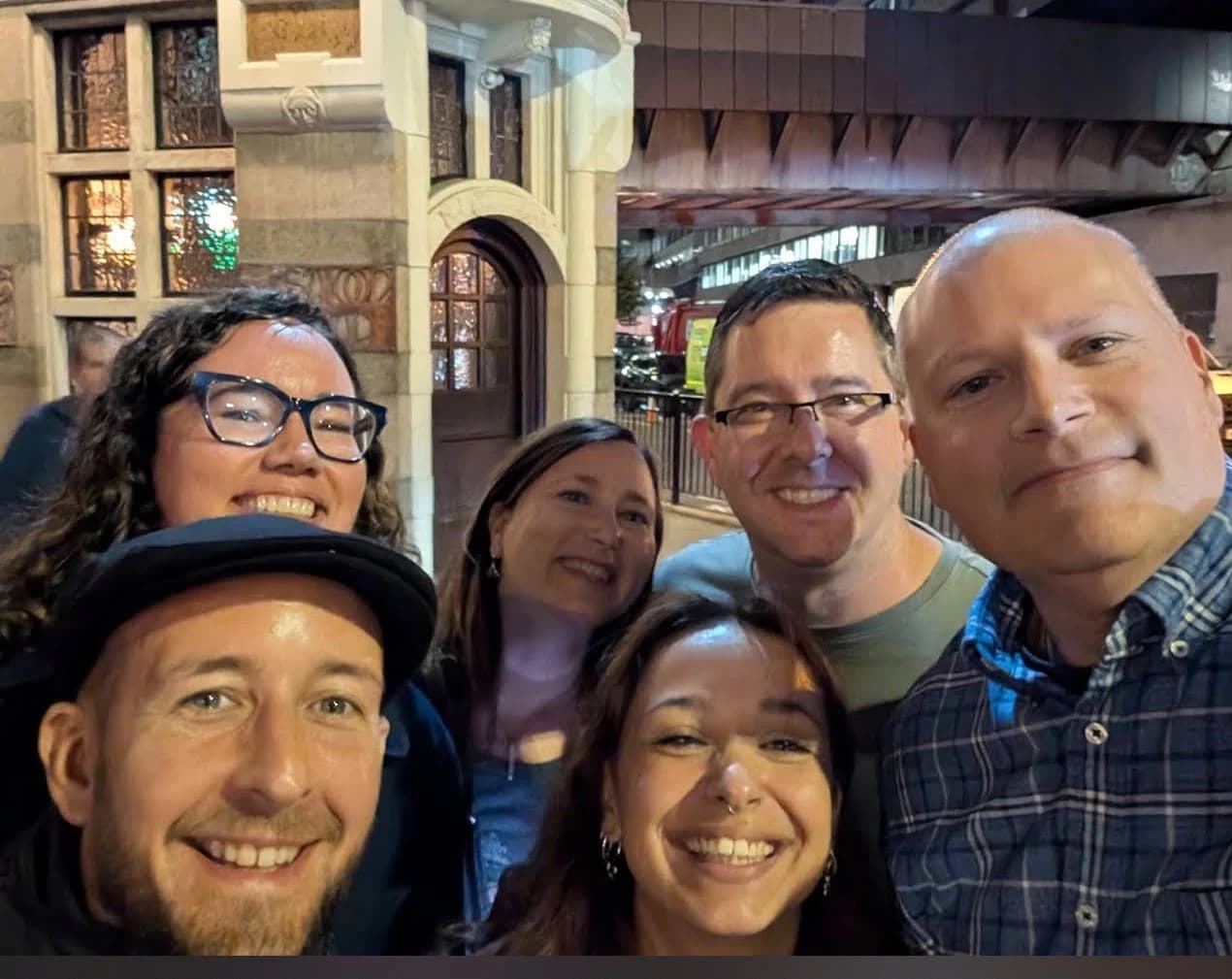
From questions to Whitechapel
See what the tour is really like.
Read first-hand stories from guests who joined our guides on the streets where the case unfolded.
Read our reviewsStill wondering?
Ask us directly.
If your question isn’t here yet, send it over. We’ll help with your booking and use the best questions to make this guide even more useful.
Contact the team