
Jack the Ripper’s five canonical victims were Mary Ann “Polly” Nichols, Annie Chapman, Elizabeth Stride, Catherine Eddowes and Mary Jane Kelly. They were killed in or close to Whitechapel between 31 August and 9 November 1888. The phrase “canonical five” is useful shorthand, not proof that every murder was committed by one person.
A note on the women: This guide centres the women’s lives and circumstances rather than treating them as scenery in the killer’s story. Contemporary newspapers repeatedly stereotyped them, but The National Archives notes that none was known to police as a sex worker and that witnesses described several forms of casual work. London Museum likewise stresses that only Mary Jane Kelly is known to have been working in the sex trade at the time of her death.
The five Jack the Ripper victims in order
The five women most commonly linked to Jack the Ripper were killed during a period of just over ten weeks:
Their deaths form the core sequence in most histories of the case. You can see the dates alongside the wider investigation in our Jack the Ripper timeline, or explore the locations on our interactive murder-sites map.
Why are they called the canonical five?
“Canonical five” is a later shorthand for the five murders most often attributed to Jack the Ripper; it was not a formal contemporary police category. The police investigation covered a broader group of Whitechapel murders, and the label does not mean investigators proved beyond doubt that one person killed all five women.
The attacks happened within a short period and a compact part of east London. London Museum explains that similarities led contemporary investigators to connect these five cases, although the wider inquiry considered other deaths too. Four of the women were killed outdoors; Mary Jane Kelly was killed inside her room. Elizabeth Stride’s injuries also differed from those of the other four, leading to a long-running theory that her attacker may have been interrupted.
The safest historical answer is therefore simple: five women are most consistently grouped together, while the exact number of victims remains uncertain.
Who were the five victims?
The women came from different backgrounds. Some had been married, some were mothers, and each had worked in ways available to working-class women in Victorian Britain. By 1888, all were living with severe financial insecurity in or around Whitechapel.
Mary Ann “Polly” Nichols
Mary Ann Nichols was the first of the canonical five. She had been married and had children, but by 1888 she was separated from her husband and moving between workhouses and common lodging houses. Nichols had recently moved from 18 Thrawl Street to the White House at 56 Flower and Dean Street. During her final night she was also seen around Thrawl Street and was unable to secure a bed.
She was last seen walking through Whitechapel in the early hours. Her body was discovered shortly afterwards in Buck’s Row, now called Durward Street. The short distances between the lodging houses she used and Buck’s Row show how concentrated these streets and nightly accommodation were.
Key locations: 18 Thrawl Street, 56 Flower and Dean Street, and Buck’s Row, now Durward Street.
Annie Chapman
Annie Chapman had also been married and had children. Ill health, separation and poverty shaped her later years. She supported herself through casual work, including crochet and flower selling, while staying at Crossingham’s Lodging House at 35 Dorset Street.
Unable to pay for her bed on the night of 7–8 September, she left the lodging house. Her body was found in the backyard of 29 Hanbury Street. The yard was reached through a passage used by the building’s residents, a reminder that these murder sites were part of ordinary, crowded domestic spaces.
Key locations: 35 Dorset Street and 29 Hanbury Street.
Elizabeth Stride
Elizabeth Stride was born in Sweden and moved to London as a young woman. She married John Stride and helped run a coffeehouse. After the relationship ended, she lived intermittently in common lodging houses and earned money through cleaning and other casual work.
She was staying at 32 Flower and Dean Street in September 1888. Her body was discovered in Dutfield’s Yard off Berner Street, now Henriques Street, at about 1am on 30 September.
Stride’s death began what became known as the “Double Event”. Because her injuries differed from those of the other four canonical victims, historians still debate whether she was killed by the same person.
Key locations: 32 Flower and Dean Street and Dutfield’s Yard.
Catherine Eddowes
Catherine Eddowes had spent years travelling and working with her partner, Thomas Conway, and later lived with John Kelly. Shortly before her death, she and Kelly returned to London after seasonal hop picking in Kent.
On 29 September she was taken into police custody for drunkenness and released at about 1am. Her body was found in Mitre Square less than an hour later. She was the second woman killed during the Double Event, after Elizabeth Stride.
Eddowes used 55 Flower and Dean Street as a lodging address, only a short distance from Stride’s lodging. That proximity reflects the concentration of cheap accommodation; it does not prove that the two women knew one another.
Key locations: 55 Flower and Dean Street and Mitre Square.
Mary Jane Kelly
Mary Jane Kelly remains the least securely documented of the five women. Much of what is known about her early life came from accounts she gave to people who knew her, and some details cannot now be verified.
Unlike the other four canonical victims, Kelly rented a small room at 13 Miller’s Court, off Dorset Street. She was killed there on 9 November 1888. The indoor setting differed significantly from the four earlier outdoor crime scenes.
Miller’s Court and most of Dorset Street have disappeared beneath later redevelopment. The loss of the buildings makes contemporary maps, witness statements and careful on-location interpretation especially important.
Key location: 13 Miller’s Court, off Dorset Street.
What did the women have in common?
The five women were not one interchangeable group. They had different childhoods, relationships, jobs and routes into Whitechapel. What they shared by 1888 was economic insecurity.
- All five were living in poverty at the time of their deaths.
- All faced housing insecurity. Four relied heavily on common lodging houses; Kelly rented a room but was substantially behind with the rent.
- Several relied on casual work and nightly lodging houses.
- Some had experienced separation, poor health, addiction or violence.
- Their lives unfolded within a society offering working-class women little financial protection.
The National Archives cautions against the familiar claim that all five were prostitutes. None was known to police as a sex worker, and people who knew them described casual jobs including cleaning and hop picking. London Museum identifies Mary Jane Kelly as the only one known to have been working in the sex trade when she was killed.
That distinction matters. The “fallen women” stereotype shifted attention away from the victims and helped generations of retellings reduce their lives to the manner of their deaths.
Were there other possible Jack the Ripper victims?
Yes—other violent deaths in Whitechapel before and after the Canonical Five have been proposed as possible Ripper murders. The surviving evidence is not strong enough to establish the killer’s exact total.
The National Archives notes that at least three other murders of women in the surrounding period were violent enough to prompt later speculation. London Museum reaches the same cautious conclusion: other cases have been linked to the Ripper, but we cannot be certain how many people the murderer killed.
This is why “five confirmed victims” is too strong. “The five women most commonly attributed to Jack the Ripper” is more accurate.
Where did the victims live?
The women’s lodging addresses clustered around Thrawl Street, Dorset Street and Flower and Dean Street. All lay within a compact area of Whitechapel and Spitalfields where cheap nightly accommodation was concentrated.
That geography was produced by economics rather than coincidence. Common lodging houses offered beds to people who could not afford conventional rent. If a resident lacked the nightly fee, there was rarely any safety net between a bed and the street.
Several original streets and buildings have since been renamed or demolished. Our interactive Jack the Ripper map marks the five murder sites and explains what survives at each location. For the wider social setting, read what Whitechapel was really like in 1888.
Frequently asked questions
How many victims did Jack the Ripper have?
Five women are most commonly attributed to Jack the Ripper, but the precise number is unknown. Other Whitechapel murders have been proposed as connected cases.
What were the victims’ names in order?
Mary Ann Nichols, Annie Chapman, Elizabeth Stride, Catherine Eddowes and Mary Jane Kelly.
Who was the first Jack the Ripper victim?
Mary Ann “Polly” Nichols, killed on 31 August 1888, is regarded as the first of the Canonical Five.
Who was the last canonical victim?
Mary Jane Kelly, killed at 13 Miller’s Court on 9 November 1888, was the fifth and last canonical victim.
Do we know that the same person killed all five women?
No. Similarities, timing and geography led investigators and later historians to group the cases, but no offender was identified and the surviving evidence cannot establish the sequence with certainty.
Walking through the history today
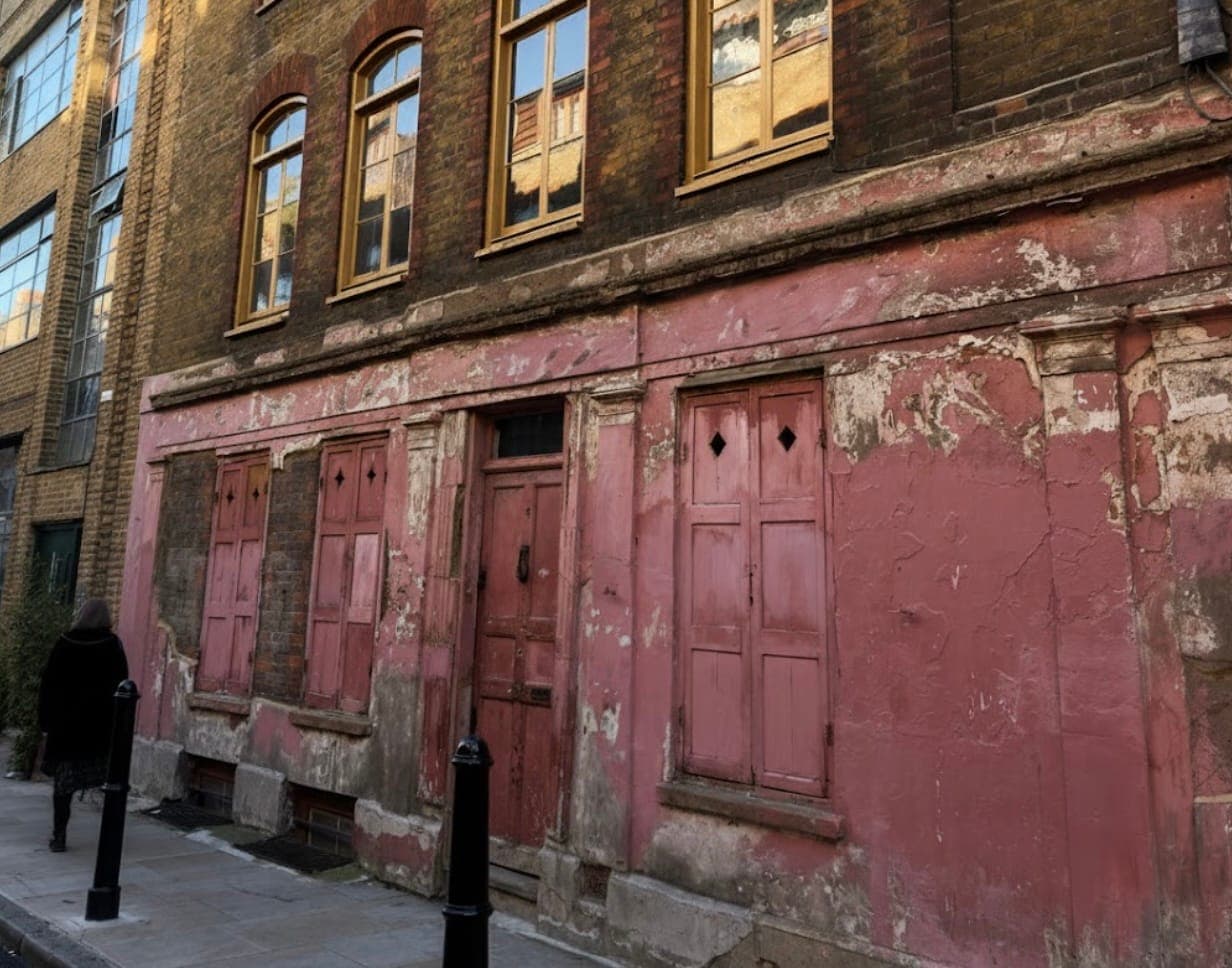
Much of the physical Whitechapel of 1888 has vanished. Buck’s Row survives under a different name; Mitre Square has been redeveloped; Dorset Street, Flower and Dean Street, Dutfield’s Yard and Miller’s Court have been transformed or erased.
Yet the distances remain revealing. Walking between the locations shows how close the lodging houses, markets, pubs, police stations and murder sites were. It turns an abstract crime story back into a real neighbourhood inhabited by real people.
Our Jack the Ripper walking tour in London follows this geography with the women’s lives, the police investigation and the changing streets of Whitechapel at the centre of the story—not just the mythology surrounding an unidentified killer.
Continue exploring: Compare the leading theories in our guide to the best-known Jack the Ripper suspects, or follow the entire case through the 1888 timeline.
Further reading: The National Archives and London Museum.