
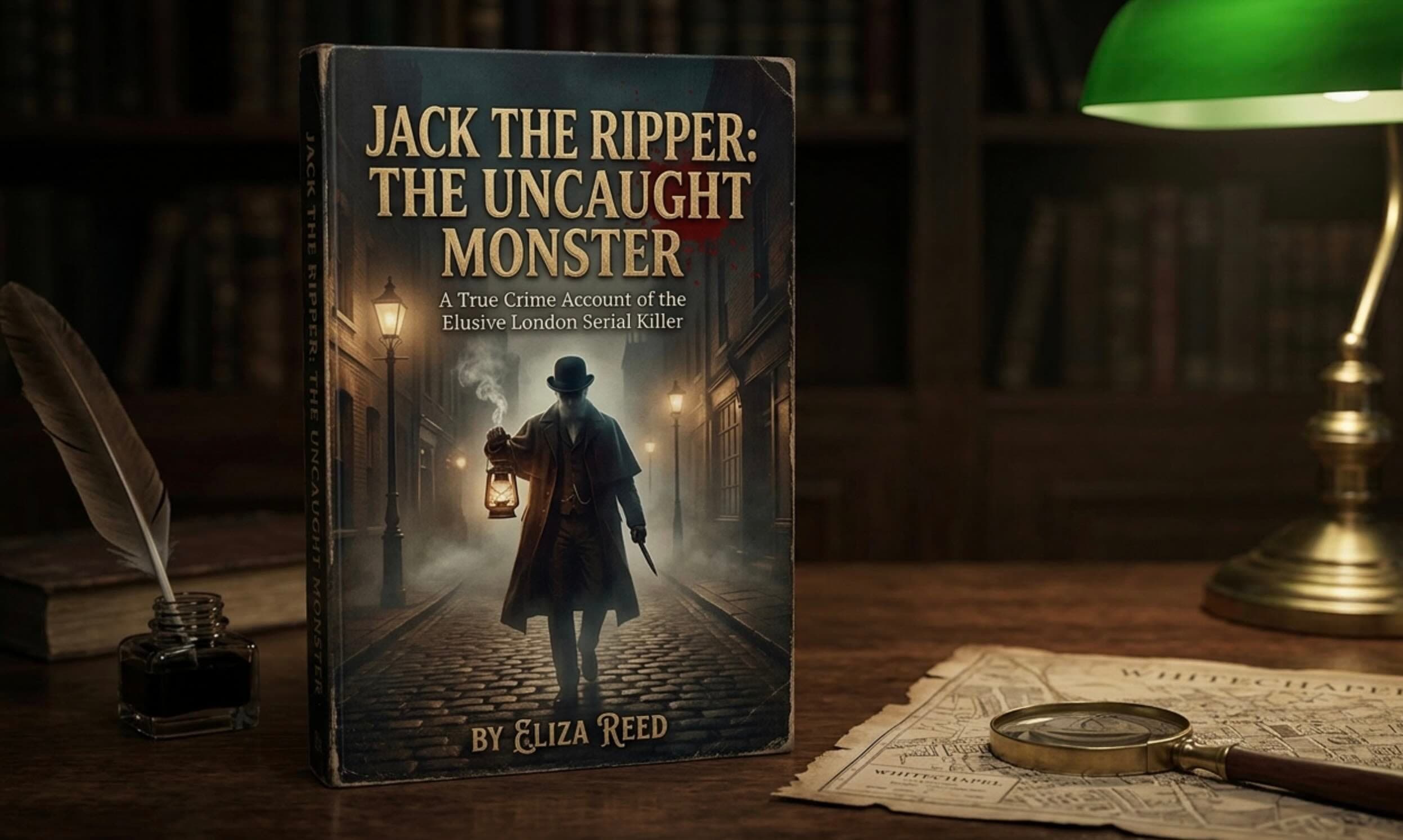
Jack the Ripper was never identified, arrested or tried. More than a century later, the likeliest explanation is not one dramatic police failure but a combination of limited forensic tools, difficult conditions in Whitechapel, conflicting testimony and an investigation overwhelmed by information.
Evidence note: The National Archives records that the murderer was never caught despite a major police investigation. The reasons below are historical explanations, not a solved reconstruction of the case.
Why the investigation failed
There Was No Modern Forensic Evidence
Victorian investigators gathered witness statements, medical evidence, physical exhibits and, in at least one case, crime-scene photographs. What they lacked were modern identification tools: routine fingerprint comparison, blood typing, DNA profiling, CCTV and searchable digital records. Evidence existed, but much of it could not reliably identify one person.
Whitechapel Was Chaotic and Crowded
Whitechapel was one of London’s poorest and most overcrowded districts at the time. Poor lighting, narrow courts, common lodging houses and constant movement made it difficult to establish who had been in a particular street at a particular time. A person familiar with the district could disappear quickly into the surrounding alleys and crowds.
Related video: Watch What Jack the Ripper Saw — Whitechapel 1888 (Restored) directly on YouTube.
Watch on YouTube ↗
The Attacks Happened Quickly
Investigators could estimate time of death only within a range, and the surviving evidence does not reveal exactly how each woman encountered her killer. What the crime scenes do suggest is that the attacks were carried out with limited opportunity before patrols or passers-by returned. Familiarity with the streets may have helped, but it cannot be proved.
Witness Descriptions Conflicted
The surviving witness accounts differ on age, height, facial hair, clothing and accent. Some witnesses may have seen unrelated men; others observed people briefly, at night and under poor lighting. The result was no single description reliable enough to identify the killer.
Crime Scenes Were Contaminated
Victorian crime-scene control was not standardised. Officers, doctors and members of the public could enter an area before evidence was fully documented, while objects were sometimes moved as part of the medical examination. That created opportunities for fragile evidence to be disturbed or lost.
The Investigation Was Overwhelmed
Police pursued large numbers of interviews, tips and suspects while also processing letters claiming to come from ‘Jack the Ripper’. Most are now treated as hoaxes, but each demanded attention and added noise to an already difficult inquiry.
The murders also crossed policing boundaries. Most sites fell within the Metropolitan Police district, while Catherine Eddowes was killed in the City of London Police area. The forces cooperated, but nineteenth-century information sharing was slower and less centralised than it is today.
The Killer May Have Left the Area
The canonical series ends with the murder of Mary Jane Kelly in November 1888, but no surviving evidence explains why. Death, imprisonment, institutionalisation, relocation and simply stopping have all been proposed. None has been proved.
A conclusive identification is now unlikely. The surviving records can test theories and eliminate exaggerations, but they do not support a criminal case against any named suspect. That distinction matters: a plausible theory is not proof.
What the Victorian Police Actually Did
It is easy to describe the investigation as primitive and stop there. In reality, officers increased patrols, interviewed large numbers of witnesses and suspects, searched lodging houses, circulated descriptions and followed tips from across Britain and overseas. The surviving Metropolitan Police files show the scale of the inquiry as well as its gaps.
The problem was not an absence of effort. Investigators had no dependable way to connect a person to biological material, compare records instantly or preserve every scene to modern standards. Large quantities of information therefore produced leads without producing an identification that could survive in court.
Could Modern DNA Solve the Case?
Modern testing cannot compensate for an uncertain chain of custody. Objects linked to the case have passed through many hands, and contamination or an incorrect provenance can make a laboratory result historically meaningless. A 2019 journal paper examined DNA on a shawl said to be connected with Catherine Eddowes, but the identification claim remains disputed and the journal later issued an expression of concern.
Even a genuine mitochondrial-DNA association would identify a maternal line shared by many people, not prove that one named person committed the murders. Without a securely documented object and a complete evidential chain, DNA cannot turn a disputed theory into a solved case.
Why the Case Remains Unsolved
The case remains unsolved because the investigation produced no reliable identification before evidence degraded and witnesses disappeared. It also became a lesson in the power of media attention: publicity generated leads, but hoaxes and sensational reporting complicated the work. The responsible conclusion is not that one suspect has secretly been proved; it is that the surviving evidence leaves the killer’s identity unknown.
Examine the evidence where the investigation unfolded
Our guides connect the surviving streets, police records and disputed theories so you can reach your own conclusion without pretending the case has been solved.
Explore our Jack the Ripper tour →
Frequently Asked Questions
Why was Jack the Ripper never caught?
No single failure explains it. Limited forensic methods, crowded streets, conflicting witness accounts, disturbed evidence, hoax correspondence and an overwhelming number of leads all reduced the chance of identifying one person.
Did Victorian police have fingerprints or DNA?
No. Police collected statements, medical observations and physical evidence, but routine fingerprint identification, blood typing and DNA profiling were not available to the 1888 investigation.
Did the Metropolitan Police and City of London Police work together?
Yes. They cooperated after Catherine Eddowes was killed in the City of London Police area, while most other canonical sites fell within the Metropolitan Police district. Communication and record-sharing were nevertheless far slower and less centralised than today.
Could DNA identify Jack the Ripper today?
Only if material had a secure, documented connection to a crime scene and an uncontaminated chain of custody. The best-known shawl claim is disputed, and the related journal paper now carries an expression of concern.
Is there a proven Jack the Ripper suspect?
No. Several people remain plausible subjects of historical debate, but the surviving evidence does not prove that any named suspect committed the five canonical murders.
If you enjoyed this, explore the five most famous Jack the Ripper suspects — the theories, the evidence, and the men behind them.