
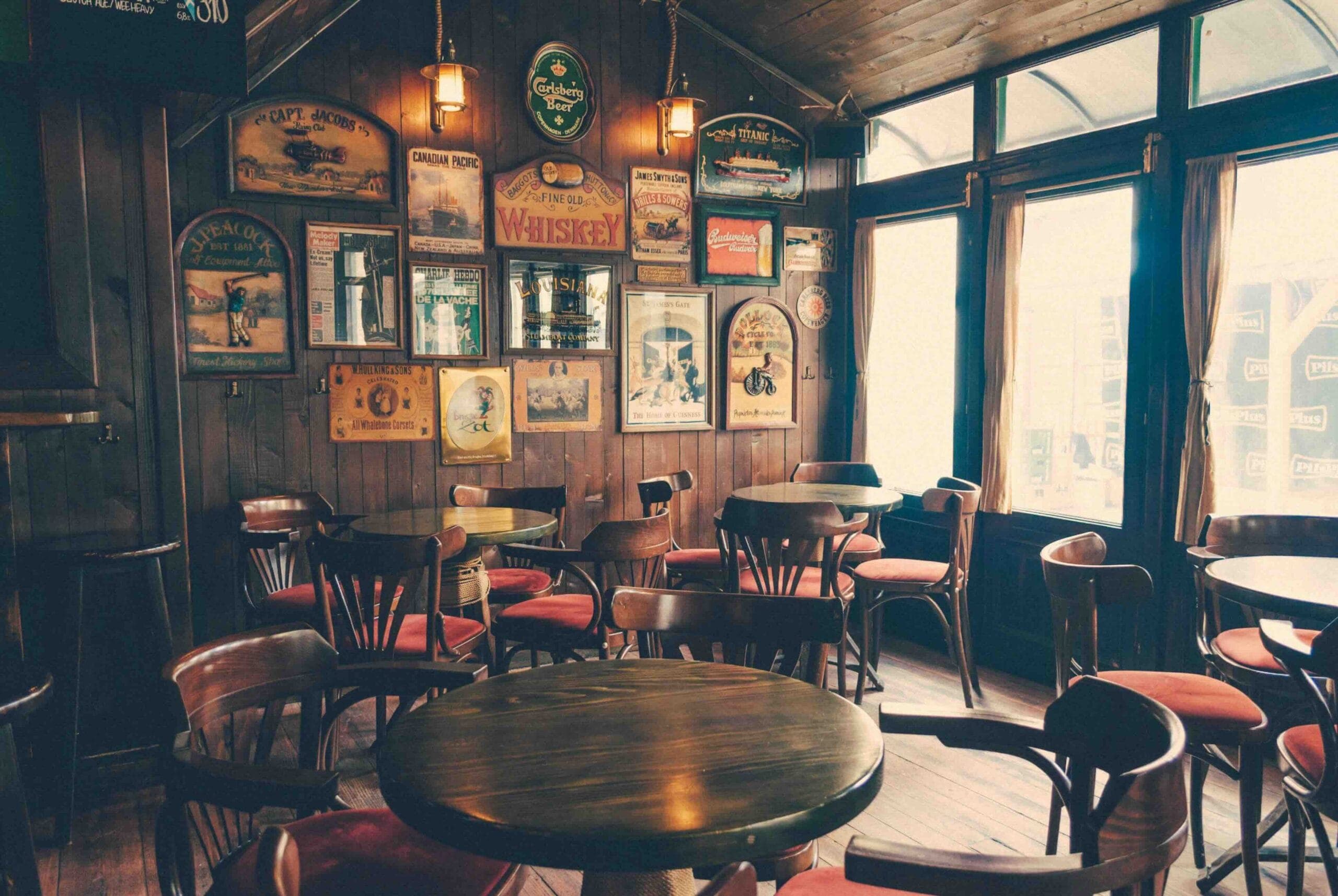
There are few places in the world where history feels as close as it does on the back streets of Whitechapel after dark. The cobblestones, the narrow alleyways, and the amber glow of old streetlamps all conspire to pull you back to 1888 — the year London was gripped by fear, and the East End became the hunting ground of history’s most infamous unidentified killer.
Heritage note: Of the pubs discussed below, the Ten Bells has the clearest official heritage record. Historic England lists it at Grade II and describes the surviving mid-nineteenth-century building and tiled interior. Other Ripper associations should be read as a mixture of documented history and later tradition.
But the story of Jack the Ripper isn’t just one of dark alleyways and police reports. Much of it played out in the warmth and noise of the local pub. In Victorian Whitechapel, the pub was an important part of working-class social life. It was where people gathered after long shifts in the markets and where lodging-house residents spent their evenings. Some pubs later became associated with the victims, though those traditions are not equally well documented. Pubs were woven into everyday life across Whitechapel, and a handful of historic venues or successor buildings still help visitors understand the district’s social geography.
If you’re visiting London and want a truly atmospheric window into Victorian history, here are the pubs you need to know about.
Five Whitechapel pubs connected to the case
The Ten Bells, The Most Famous Ripper Pub
84 Commercial Street, Spitalfields, E1 6LY
Map: Open the Ten Bells at 84 Commercial Street in Google Maps.
Open in Google Maps ↗
If there’s one pub that defines the Jack the Ripper story, it’s the Ten Bells. Standing on the corner of Commercial Street and Fournier Street, directly opposite the magnificent Christ Church Spitalfields, it has been serving East End Londoners since at least the mid-18th century — and it hasn’t lost an ounce of its Victorian character.
The pub’s name has shifted over the years, always tied to the number of bells in the church peal next door. In the 18th century it was called the Eight Bells; by 1794, records show it had become the Ten Bells, after the church added more chimes. That name has stuck ever since — barring a controversial interlude from 1976 when it was briefly renamed “The Jack the Ripper” to capitalise on its history, before public pressure, led by the Reclaim the Night campaign, restored the original name in 1988.
Later accounts associate Annie Chapman with the Ten Bells on the morning of 8 September 1888, but the identification is disputed and does not appear securely in the surviving official evidence.
Mary Jane Kelly is also linked to the pub in later witness and press accounts. Those reports are historically interesting, but they should not be treated as conclusive proof that she was a regular or that her movements on the final evening are known with certainty.
Today, the Ten Bells is a Grade II listed building with a beautifully preserved Victorian interior. Its best-documented historic feature is the coloured nineteenth-century tiled interior, including the mural Spitalfields in ye Olden Time. It’s atmospheric, historic, and genuinely lovely, well worth a visit whether you’re a Ripper enthusiast or simply a fan of a well-preserved Victorian pub.
The White Hart, Ripper Corner
89 Whitechapel High Street, E1 7RA
Map: Open the White Hart on Whitechapel High Street in Google Maps.
Open in Google Maps ↗
The White Hart is a pub with serious Ripper credentials, though they come from a slightly different angle. A basement barber’s shop at the White Hart was later associated with Severin Klosowski, who used the name George Chapman. That connection appears to date from around 1890, after the Whitechapel murders, and does not prove he was the killer.
The pub also sits uncomfortably close to the site of the very first possible Ripper killing. On 7 August 1888, Martha Tabram was stabbed 39 times in a stairwell on nearby George Yard — just 50 feet from the back of the White Hart. The murder site was nearby, but proximity alone does not establish that Tabram drank at the White Hart, and standard accounts more often place her at another pub.
The White Hart retains a historic pub presence on this prominent corner, but the building and business have changed over time. Its atmosphere should not be mistaken for an untouched 1888 interior. It’s long been a gathering point for Ripper researchers and enthusiasts, the famous corner table near the back has become known simply as “Ripper Corner”, where regulars swap theories, swap anecdotes, and argue over the identity of the Ripper over a pint. If you’re visiting with a genuine interest in the case, this is the pub where you’re most likely to end up in conversation with a fellow obsessive.
The Alma, Spelman Street
41 Spelman Street, E1 5LQ
Map: Open the Alma on Spelman Street in Google Maps.
Open in Google Maps ↗
A little off the main tourist trail, the Alma on Spelman Street is worth seeking out. Its upper floor has been decorated with an impressive collection of Ripperana — original posters, artwork, and reproductions of Victorian newspaper reports covering the murders. It’s a more intimate, neighbourhood pub feel compared to the Ten Bells, but that’s part of its charm. It offers a quieter space to absorb the history away from the busier streets.
The Britannia, A Pub Lost to Time
The original Britannia pub once stood on the corner of Dorset Street — directly opposite the Ten Bells and at the heart of what was then one of London’s most notorious slum streets. Annie Chapman was known to drink here, and it was in this pub that she became embroiled in an argument with a woman named Eliza Cooper over a bar of soap, leading to a physical fight. The bruising from that brawl was still visible on Annie’s body at her autopsy, just days later.
The Britannia no longer exists, the building was demolished long ago, but the site is just steps from the Ten Bells, and a walk through what is now Duval Street (formerly Dorset Street) still carries a certain weight.
The Kings Stores, A Curious Footnote
Corner of Widegate Street and Sandy’s Row, E1
Map: Open the Kings Stores on Widegate Street in Google Maps.
Open in Google Maps ↗
The Kings Stores has a large sign above the door declaring “Jack the Ripper Last Seen Here 1888.” There’s just one problem: the pub doesn’t appear in any serious Ripper literature, and there’s no historical basis for the claim. It’s a great example of how the Ripper legend has been enthusiastically embraced by the local hospitality trade, sometimes more for atmosphere than accuracy.
That said, it’s an interesting stop, and the pub itself has a decent amount of Victorian character. Just take the signage with a generous pinch of salt.
Tips for Visiting
The best time to explore Whitechapel’s Ripper pubs is in the evening, ideally in autumn or winter when the streets take on a darker, more atmospheric quality. Most of the key Jack the Ripper locations are within easy walking distance of each other, clustered around Commercial Street, Whitechapel High Street, and Brick Lane.
A well-researched Jack the Ripper walking tour in London can place these pubs in their wider historical setting while distinguishing documented evidence from later folklore.
A few practical notes: the Ten Bells can get busy on weekends, so weekday evenings are better if you want to soak up the atmosphere at your own pace. The White Hart is smaller and more local in character, great for a longer, quieter stay.
Whitechapel has changed enormously since 1888. The old slums are long gone, replaced by a lively, diverse neighbourhood full of Bangladeshi restaurants, vintage shops, and street art. But stand outside the Ten Bells on a cold November evening, look up at the spire of Christ Church, and it’s not hard to imagine the world Mary Kelly walked through on the last night of her life.
Put the pubs in their historical setting
Our evening walk connects surviving landmarks with the murder sites, police boundaries and the lives of the women—without treating later pub folklore as fact.
Explore our Jack the Ripper tour →
Frequently Asked Questions
Which historic pubs are worth visiting in Whitechapel?
The Ten Bells is the clearest choice for documented architectural heritage and Victorian atmosphere. The White Hart and the Alma offer different parts of the modern East End pub experience, but the strength of their claimed connections to the Ripper case varies.
Which pub has the strongest Jack the Ripper connection?
The Ten Bells is the best-known surviving pub associated with the case and has the strongest official heritage record. Specific claims about individual victims still require caution because much of the pub lore comes from later accounts.
Is the Ten Bells the original building?
Historic England records the present building as mid-nineteenth century, which means it was standing in 1888. A pub existed on or near the site earlier, but the current building should not be described as unchanged since its earliest foundation.
Can you walk between the Whitechapel pubs?
Yes. The surviving pubs discussed here are within the wider Whitechapel and Spitalfields area, although the most useful route depends on current opening times and which historical locations you want to include.
Are all Jack the Ripper pub stories true?
No. Some claims are supported by heritage records or contemporary reporting; others are later traditions, commercial stories or speculation. A pub’s proximity to a murder site does not by itself prove that a victim or the killer visited it.
The pubs of Whitechapel aren’t just tourist attractions — they’re some of the last surviving physical links to one of history’s most enduring mysteries. Raise a glass, listen to the stories, and see what you think.