Category: Jack The Ripper Tours

Jack The Ripper Tours

  • Is a Jack the Ripper Tour Worth It?

    Is a Jack the Ripper Tour Worth It?

    Every night, hundreds of tourists wind through the same dark, narrow streets of Whitechapel that witnessed one of history’s most gripping unsolved mysteries. The question is: should you be one of them?

    If you’ve been wondering whether a Jack the Ripper tour is actually worth your time and money, or whether it’s just a tourist trap dressed up in Victorian clothing, this is the honest answer you’re looking for.

    The Short Answer: Yes — But It Depends on the Tour

    A Jack the Ripper tour can be one of the most memorable things you do in London. It can also be a disappointment. The difference almost entirely comes down to the quality of your guide and the size of your group.

    Done well, a Ripper tour isn’t just a ghost walk. It’s a window into 1888 London, the poverty of the East End, the failures of the Victorian justice system, the real lives of the five women who were killed, and the genuine mystery that has never been solved. You leave with a sense of the city that no museum exhibit can replicate.

    Done badly, it’s a guide reading facts off a phone to a group of 40 strangers in the rain.

    So before you dismiss or book, here’s what you should know.

    What You Actually Get on a Jack the Ripper Tour

    A good Jack the Ripper walking tour takes you through the streets of Whitechapel and Spitalfields in London’s East End — the same area where the murders took place in the autumn of 1888. You’ll visit the actual locations where the victims were discovered, hear the stories behind each crime, and get a feel for what this part of London looked and felt like at the time.

    The best tours weave in the social history too — the poverty, the overcrowding, the politics — because that context is what makes the story genuinely compelling rather than just gruesome. This wasn’t random violence. It happened in a specific place, at a specific moment in history, for specific reasons.

    Most tours last around two hours and cover roughly a mile and a half on foot. The area is compact and walkable, and many of the original streets still exist, which makes the whole experience feel surprisingly authentic.

    Who Gets the Most Out of It

    A Jack the Ripper tour tends to hit differently depending on what you’re bringing to it.

    • You’ll love it if you: enjoy true crime, are curious about Victorian history, want to see a side of London most tourists miss, or simply love a good story told in the right setting.
    • It might not be for you if: you’re expecting jump-scares and horror theatrics, or you want a fast-paced highlight reel of the city. This is a walking tour with substance — it rewards curiosity.
    • Is it suitable for children? We’d suggest 12 and above. The content deals with historical murders and can be discussed in a thoughtful, age-appropriate way, but it’s not designed for young children.

    What to Look for in a Good Tour

    Not all Ripper tours are created equal. Here’s what separates a memorable experience from a mediocre one:

    • Small group size. The moment you’re in a group of 40-plus people, you lose the atmosphere and half the guide’s words. Look for tours that cap numbers, ideally under 20.
    • A knowledgeable guide. The best guides know this case deeply and can go beyond the Wikipedia version. They can answer questions, share lesser-known details, and handle the history with respect.
    • Authentic storytelling. The Ripper case isn’t a pantomime. The best tours treat the victims as real people with real lives — not props in a horror story.
    • The right pace. You want time to absorb each location, not a rushed march from stop to stop.

    Why Whitechapel at Night Hits Differently

    You can read about Jack the Ripper anywhere. But standing in a narrow alleyway off Commercial Street at dusk, with cobblestones underfoot and the sounds of the city fading behind you, that’s something a book can’t give you.

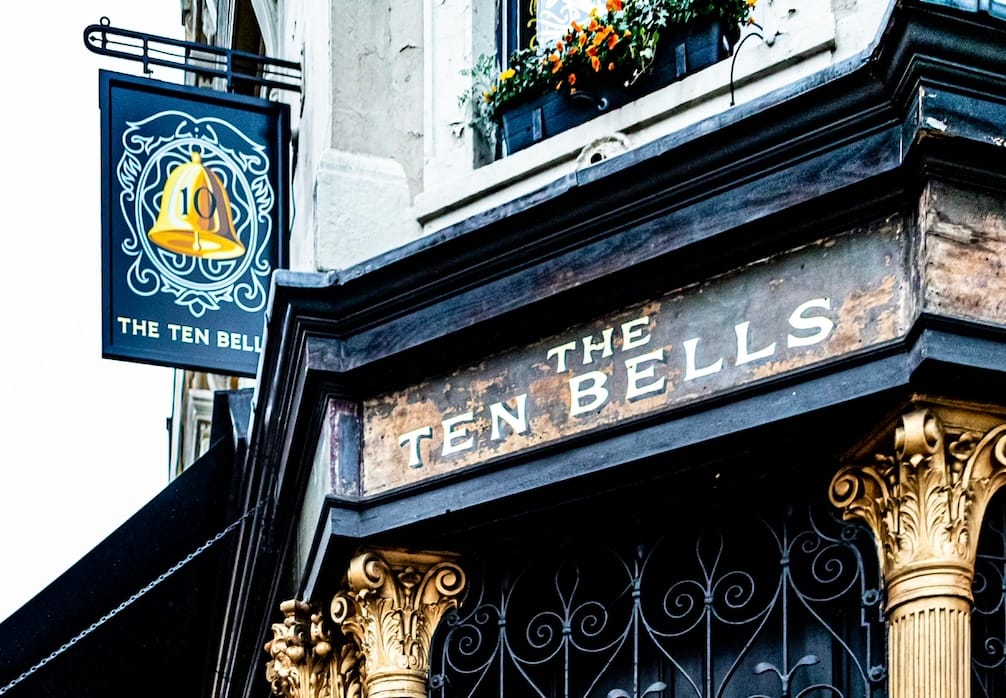
    The East End has changed enormously since 1888, but enough of the original streets, pubs, and architecture remain to make the experience feel genuinely connected to the past. The Ten Bells pub, where some of the victims drank, still stands on the corner of Commercial Street. Hanbury Street, where Annie Chapman was found, is still there. The geography makes the history real in a way that’s hard to explain until you’ve experienced it.

    That’s ultimately why a Jack the Ripper tour is worth it, not because of the horror, but because of the humanity.

    Ready to See Whitechapel for Yourself?

    Our Jack the Ripper tour keeps groups small, prioritises storytelling over spectacle, and treats this history with the care it deserves. Whether you’re a first-time visitor to London or you’ve been a dozen times, this is a side of the city most people never see.

  • The Dear Boss Letter: How Jack the Ripper Got His Name

    The Dear Boss Letter: How Jack the Ripper Got His Name

    Everyone knows the name Jack the Ripper. It’s one of the most recognisable monikers in the history of crime, a name that has inspired films, books, walking tours, and endless theories for nearly 140 years. But here’s something that surprises most people when they first hear it: the name was almost certainly invented by a journalist.

    This is the story of a single letter, dated 25 September 1888, that changed everything — and may have been a hoax all along.

    Before the Name: “The Whitechapel Murderer”

    In the summer and early autumn of 1888, a killer was stalking the streets of Whitechapel in London’s East End. By late September, at least three women had been brutally murdered — Mary Ann Nichols, Annie Chapman, and most recently, two victims on the same night: Elizabeth Stride and Catherine Eddowes, in what became known as the “Double Event” on 30 September.

    The press were covering the murders obsessively, but they had no name for the killer. Newspapers referred to him as “the Whitechapel Murderer” or more sensationally “Leather Apron”, a nickname that had emerged from early witness descriptions of a man seen intimidating women in the area. It was dramatic enough, but nothing like what was coming.

    The Letter That Changed Everything

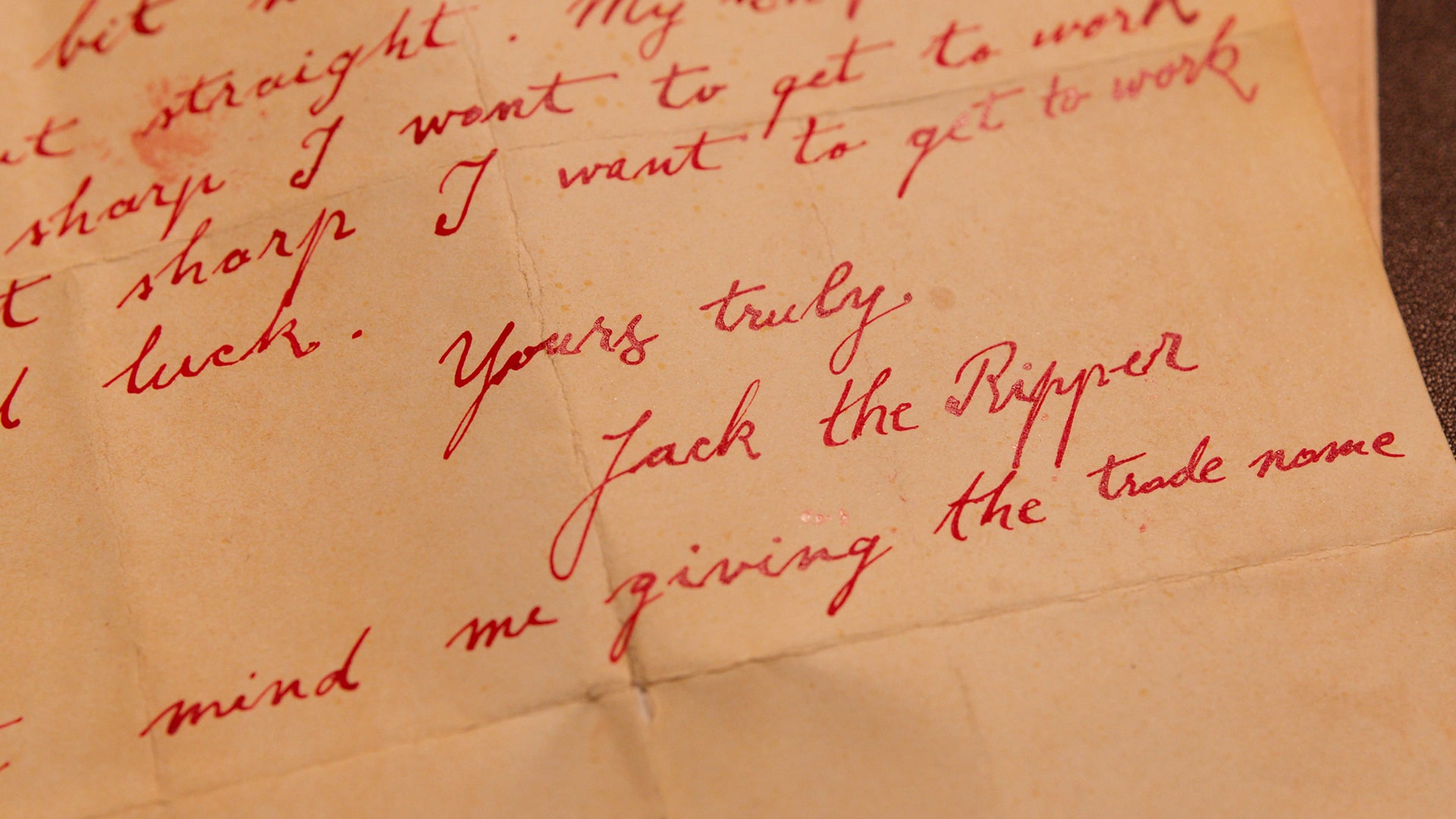
    On 27 September 1888, a letter arrived at the offices of the Central News Agency in London. It was written in red ink, in a confident, somewhat mocking hand, and it was addressed simply: “Dear Boss.”


    The letter read, in part:

    “I keep on hearing the police have caught me but they wont fix me just yet. I have laughed when they look so clever and talk about being on the right track. That joke about Leather Apron gave me real fits. I am down on whores and I shant quit ripping them till I get buckled.”

    And then, near the end, the writer signed off:

    “Yours truly, Jack the Ripper”

    It was the first time that name had ever appeared in writing. The Central News Agency forwarded the letter to Scotland Yard on 29 September, the same night as the Double Event murders. Two days later, on 1 October, a follow-up postcard arrived, also signed “Jack the Ripper” and referencing the two killings. This second piece of correspondence became known as the “Saucy Jacky” postcard.

    Scotland Yard made a decision that would cement the name forever: they released facsimiles, printed copies, of both communications to the press on 3 October 1888, hoping that someone would recognise the handwriting. Instead, they handed the Victorian media the story of the century. Within days, the name Jack the Ripper was on the front page of every newspaper in Britain.

    A Media Sensation, and a Flood of Copycats


    The public reaction was immediate and extraordinary. The name caught something that “Leather Apron” never had it was vivid, almost theatrical, and it carried an unmistakable dark charisma. Within weeks, Scotland Yard was receiving hundreds of letters, all claiming to be from “Jack the Ripper,” most of them copying phrases and style from the original Dear Boss letter.

    The vast majority were obvious hoaxes, and the police knew it. But the damage — if that’s the right word, was done. The name had taken on a life of its own.

    Was It a Hoax All Along?

    Here’s where the story takes a genuinely fascinating turn. In the years following the murders, senior police officials began expressing serious doubts about the letter’s authenticity. Chief Inspector John Littlechild and other investigators came to believe that the Dear Boss letter and the Saucy Jacky postcard were not written by the killer at all, but by a journalist, looking to keep the story alive.

    In 1931, those suspicions crystallised into something more specific. A journalist named Fred Best reportedly confessed that he and a colleague at The Star newspaper, a man named Tom Bullen, had together written the Dear Boss letter, the Saucy Jacky postcard, and other communications — and that it was they who had coined the name “Jack the Ripper” to drive up their paper’s circulation.

    Think about what that means for a moment. The most famous alias in criminal history may have been invented in a newsroom, not by a killer.

    Modern forensic analysis has added weight to this theory. In 2018, Andrea Nini, a forensic linguist at the University of Manchester, published research concluding that the Dear Boss letter and the Saucy Jacky postcard were almost certainly written by the same person — suggesting a common author behind both, rather than an impulsive killer dashing off correspondence between murders. If the letters share an author, and that author wasn’t the Ripper, then the “Jack the Ripper” name is one of the most successful, and consequential — pieces of media fabrication in history.

    Why Does It Matter?

    It matters for several reasons, and not just as a historical curiosity.

    First, it’s a reminder of how powerfully a name can shape a story. Before the Dear Boss letter, the Whitechapel murders were a horrifying local crime story. After it, they became a global sensation, with a named, almost mythologised villain at the centre. The name gave the public something to latch onto, something almost fictional in its drama. It made “Jack the Ripper” feel like a character rather than a crime.

    Second, it raises a genuine ethical question that still feels relevant today: to what extent did the press of 1888 amplify — or even partly create — the terror that gripped London? The Victorian tabloid press was competitive, often sensationalist, and entirely unregulated. If Fred Best’s confession is accurate, then journalists didn’t just cover the story. They wrote themselves into it.

    Third, and perhaps most intriguingly: if the letters were a hoax, then we’ve been calling this killer by the wrong name for nearly 140 years. The Whitechapel Murderer is still unidentified. But “Jack the Ripper” a name invented in a newspaper office has outlasted every suspect, every theory, and every investigation.

    Where Is the Letter Now?

    The original Dear Boss letter is held in the archives of the City of London Police, and is occasionally displayed at special exhibitions. A facsimile is reproduced in numerous books and online archives, and it remains one of the most studied documents in criminal history.

    If you’re visiting London, the letter’s story is a central part of most serious Jack the Ripper walking tours — and understanding it changes how you see the whole case. Because before you can ask “who was Jack the Ripper?”, it’s worth asking a more unsettling question first: who decided to call him that?

    The answer, in all likelihood, was a journalist trying to sell newspapers. And it worked better than anyone could have imagined.

  • Jack the Ripper Pubs in Whitechapel: Historic Pubs Connected to the Ripper

    Jack the Ripper Pubs in Whitechapel: Historic Pubs Connected to the Ripper

    There are few places in the world where history feels as close as it does on the back streets of Whitechapel after dark. The cobblestones, the narrow alleyways, and the amber glow of old streetlamps all conspire to pull you back to 1888 — the year London was gripped by fear, and the East End became the hunting ground of history’s most infamous unidentified killer.

    But the story of Jack the Ripper isn’t just one of dark alleyways and police reports. Much of it played out in the warmth and noise of the local pub. In Victorian Whitechapel, the pub was the social heartbeat of working-class life. It was where people gathered after long shifts in the markets, where lodging house residents spent their evenings, and where women like Annie Chapman and Mary Kelly spent the final hours of their lives. Whitechapel alone had around 45 pubs in 1888 — one on virtually every corner — and a handful of them are still standing today, carrying those stories within their walls.

    If you’re visiting London and want a truly atmospheric window into Victorian history, here are the pubs you need to know about.

    The Ten Bells, The Most Famous Ripper Pub

    84 Commercial Street, Spitalfields, E1 6LY


    If there’s one pub that defines the Jack the Ripper story, it’s the Ten Bells. Standing on the corner of Commercial Street and Fournier Street, directly opposite the magnificent Christ Church Spitalfields, it has been serving East End Londoners since at least the mid-18th century — and it hasn’t lost an ounce of its Victorian character.

    The pub’s name has shifted over the years, always tied to the number of bells in the church peal next door. In the 18th century it was called the Eight Bells; by 1794, records show it had become the Ten Bells, after the church added more chimes. That name has stuck ever since — barring a controversial interlude from 1976 when it was briefly renamed “The Jack the Ripper” to capitalise on its history, before public pressure, led by the Reclaim the Night campaign, restored the original name in 1988.

    Two of the Ripper’s victims are closely connected to this pub. Annie Chapman was allegedly seen drinking here in the early hours of 8 September 1888 — the morning she was murdered in nearby Hanbury Street. A potman at the pub later claimed a strange man in a skullcap had appeared at the door and beckoned her out. Whether or not that account is accurate, Annie was dead within hours.

    Mary Jane Kelly, the Ripper’s final and most brutally murdered victim, was a regular here too. On the night of 8 November 1888, she was seen leaving the Ten Bells before returning to her room in Miller’s Court, just across the street, where her body was discovered the following morning.

    Today, the Ten Bells is a Grade II listed building with a beautifully preserved Victorian interior. The original woodwork, ornate bar, and a spectacular late-19th-century painted tile mural depicting Spitalfields in ye Olden Time all survive intact. It’s atmospheric, historic, and genuinely lovely, well worth a visit whether you’re a Ripper enthusiast or simply a fan of a well-preserved Victorian pub.


    The White Hart, Ripper Corner

    89 Whitechapel High Street, E1 7RA


    The White Hart is a pub with serious Ripper credentials, though they come from a slightly different angle. Its basement barber shop was once the workplace of Severin Klosowski, a Polish immigrant who later went by the name George Chapman — one of the most seriously considered suspects in the Ripper case.

    The pub also sits uncomfortably close to the site of the very first possible Ripper killing. On 7 August 1888, Martha Tabram was stabbed 39 times in a stairwell on nearby George Yard — just 50 feet from the back of the White Hart. She was reportedly drinking here earlier that evening.

    The White Hart has barely changed in over a century. There were some minor alterations in 1938 and 1969, and a brief renaming as Clutterbuck’s in the 1990s, but the pub’s bones are essentially Victorian. It’s long been a gathering point for Ripper researchers and enthusiasts, the famous corner table near the back has become known simply as “Ripper Corner”, where regulars swap theories, swap anecdotes, and argue over the identity of the Ripper over a pint. If you’re visiting with a genuine interest in the case, this is the pub where you’re most likely to end up in conversation with a fellow obsessive.

    The Alma, Spelman Street

    41 Spelman Street, E1 5LQ


    A little off the main tourist trail, the Alma on Spelman Street is worth seeking out. Its upper floor has been decorated with an impressive collection of Ripperana — original posters, artwork, and reproductions of Victorian newspaper reports covering the murders. It’s a more intimate, neighbourhood pub feel compared to the Ten Bells, but that’s part of its charm. It offers a quieter space to absorb the history away from the busier streets.

    The Britannia, A Pub Lost to Time

    The original Britannia pub once stood on the corner of Dorset Street — directly opposite the Ten Bells and at the heart of what was then one of London’s most notorious slum streets. Annie Chapman was known to drink here, and it was in this pub that she became embroiled in an argument with a woman named Eliza Cooper over a bar of soap, leading to a physical fight. The bruising from that brawl was still visible on Annie’s body at her autopsy, just days later.

    The Britannia no longer exists, the building was demolished long ago, but the site is just steps from the Ten Bells, and a walk through what is now Duval Street (formerly Dorset Street) still carries a certain weight.

    The Kings Stores, A Curious Footnote

    Corner of Widegate Street and Sandy’s Row, E1


    The Kings Stores has a large sign above the door declaring “Jack the Ripper Last Seen Here 1888.” There’s just one problem: the pub doesn’t appear in any serious Ripper literature, and there’s no historical basis for the claim. It’s a great example of how the Ripper legend has been enthusiastically embraced by the local hospitality trade, sometimes more for atmosphere than accuracy.

    That said, it’s an interesting stop, and the pub itself has a decent amount of Victorian character. Just take the signage with a generous pinch of salt.

    Tips for Visiting

    The best time to explore Whitechapel’s Ripper pubs is in the evening, ideally in autumn or winter when the streets take on a darker, more atmospheric quality. Most of the key locations are within easy walking distance of each other, clustered around Commercial Street, Whitechapel High Street, and Brick Lane.

    Several well-regarded Jack the Ripper walking tours incorporate pub stops into their routes, combining the atmospheric storytelling of a guided tour with the pleasure of a Victorian East End pub crawl. These typically run in the evenings and last around two hours, finishing near Mitre Square, the site of one of the Ripper’s most notorious murders.

    A few practical notes: the Ten Bells can get busy on weekends, so weekday evenings are better if you want to soak up the atmosphere at your own pace. The White Hart is smaller and more local in character, great for a longer, quieter stay.

    Whitechapel has changed enormously since 1888. The old slums are long gone, replaced by a lively, diverse neighbourhood full of Bangladeshi restaurants, vintage shops, and street art. But stand outside the Ten Bells on a cold November evening, look up at the spire of Christ Church, and it’s not hard to imagine the world Mary Kelly walked through on the last night of her life.

    The pubs of Whitechapel aren’t just tourist attractions — they’re some of the last surviving physical links to one of history’s most enduring mysteries. Raise a glass, listen to the stories, and see what you think.

  • Jack the Ripper Victims: Where They Lived in Victorian Whitechapel

    Jack the Ripper Victims: Where They Lived in Victorian Whitechapel

    The five canonical victims of Jack the Ripper weren’t just statistics in Victorian crime records—they were real women with real addresses, living in one of London’s most desperate neighborhoods. Understanding where these women lived reveals as much about the Ripper case as the crimes themselves.

    Why Their Addresses Matter

    In 1888, Whitechapel wasn’t just poor—it was catastrophically overcrowded. The victims’ addresses tell us about the lodging house system, the economic desperation that made women vulnerable, and why the Ripper’s hunting ground was so concentrated.

    When you see where Mary Ann Nichols, Annie Chapman, Elizabeth Stride, Catherine Eddowes, and Mary Jane Kelly lived, you realize they all existed within roughly half a square mile. This wasn’t coincidence—it was circumstance.

    Mary Ann Nichols: 18 Thrawl Street

    Mary Ann “Polly” Nichols was the first canonical victim, murdered on August 31, 1888. At the time of her death, she’d been staying at 18 Thrawl Street, a common lodging house just off Brick Lane.

    Thrawl Street still exists today, though the Victorian buildings are long gone. Common lodging houses—essentially Victorian homeless shelters—charged 4 pence per night for a bed. On the night Polly died, she’d been turned away for not having her doss money. She was last seen alive at 2:30 AM, walking toward Buck’s Row (now Durward Street) where her body was discovered less than an hour later.

    What it tells us: The proximity between her lodging and murder site—less than a 10-minute walk—shows how small the victims’ world really was. When you couldn’t afford your bed, you walked the streets until dawn or earned your doss money however you could.

    Annie Chapman: 35 Dorset Street

    Annie Chapman, murdered September 8, 1888, lived at Crossingham’s Lodging House at 35 Dorset Street. If Thrawl Street was rough, Dorset Street was infamous—known as “the worst street in London.”

    Like Polly, Annie was turned away on the night of her murder for lacking the 8 pence for her bed (prices varied by lodging house). The deputy saw her leave around 1:45 AM. Her body was found at 6 AM in the backyard of 29 Hanbury Street—a straight 5-minute walk from Dorset Street.

    Dorset Street no longer exists; it was demolished in the 1920s and is now covered by the modern white buildings of the Whites Row Estate. But walking through this area today, you can still sense the narrow passages and enclosed yards that made Victorian Whitechapel so dangerous after dark.

    What it tells us: The Ripper knew this area intimately. The backyard at Hanbury Street was accessed through a passage in a multi-occupancy building—not somewhere a stranger would stumble upon by chance.

    Elizabeth Stride: 32 Flower and Dean Street

    Elizabeth Stride was murdered on September 30, 1888—the night of the “double event” when two women died within an hour. She’d been living at 32 Flower and Dean Street, another common lodging house in what was perhaps Whitechapel’s most notorious street.

    Flower and Dean Street was so crime-ridden that it appears repeatedly in Victorian social reform literature. Charles Booth’s poverty maps colored it black—the worst rating possible. Elizabeth’s body was found in Dutfield’s Yard off Berner Street (now Henriques Street), again just a few minutes’ walk from her lodging.

    Today, Flower and Dean Street has been completely redeveloped and renamed Lolesworth Close. Council estates stand where the lodging houses once packed in hundreds of desperate people each night.

    What it tells us: The “double event” happened because the Ripper was likely interrupted with Elizabeth Stride. He then walked just 12 minutes southeast to Mitre Square and killed Catherine Eddowes. Both locations were within his comfort zone.

    Catherine Eddowes: 55 Flower and Dean Street

    Catherine Eddowes, the second victim of the double event, also lived on Flower and Dean Street—number 55, just doors away from Elizabeth Stride. This wasn’t unusual; many of the victims knew each other or shared the same lodging houses.

    Catherine had actually been in police custody earlier that night, arrested for being drunk and disorderly. She was released at 1:00 AM and murdered in Mitre Square by 1:45 AM. The speed of this attack, combined with the extensive mutilations, has led many Ripperologists to believe the killer was indeed interrupted with Stride and took out his frustration on Eddowes.

    Mitre Square still exists today and looks remarkably similar to 1888—one of the few Ripper locations where you can genuinely stand where history happened.

    What it tells us: Two victims living on the same street reinforces how small and interconnected this community was. Everyone knew everyone, yet the Ripper remained anonymous.

    Mary Jane Kelly: 13 Miller’s Court

    Mary Jane Kelly’s address is perhaps the most haunting because unlike the others, she wasn’t killed on the street—she was murdered in her own room at 13 Miller’s Court, off Dorset Street.

    This single room, roughly 12 feet square, was where the Ripper committed his most savage attack. Because he had privacy and time, the mutilations were extensive. She was found on the morning of November 9, 1888.

    Miller’s Court no longer exists. It was demolished in the 1920s, and the area is now a car park behind what used to be Spitalfields Market. A small section of Dorset Street remains as Duval Street, but the court itself is gone entirely.

    What it tells us: Mary Jane was the only victim killed indoors, leading some to believe the Ripper either knew her personally or that this was an escalation—he’d grown bold enough to follow a victim inside. The fact that she had her own room (not just a bed in a dormitory) suggests she was slightly better off than the other victims, though still desperately poor by any standard.

    The Geography of Desperation

    When you map these addresses, a pattern emerges. All five women lived within a half-mile radius. Their lodging houses clustered around Flower and Dean Street, Thrawl Street, Dorset Street, and Fashion Street—the absolute epicenter of Victorian poverty.

    This wasn’t a coincidence. This was the only area where women in their circumstances could live. Rents elsewhere in London were beyond their means. The common lodging houses of Whitechapel represented the bottom rung of Victorian housing—one step above sleeping rough.

    The Ripper didn’t need to hunt widely. His victims were contained by economics, trapped in a tiny area where desperation was the common currency.

    Walking These Streets Today

    Very little of 1888 Whitechapel remains physically intact. Thrawl Street has been rebuilt. Dorset Street was obliterated. Flower and Dean Street was renamed and redeveloped. But the street pattern is largely the same, and walking from address to address reveals just how compressed this world was.

    Modern Whitechapel has transformed dramatically—now home to markets, street art, and the overspill of the City. But the echo of those Victorian streets remains in the tight alleyways, the sudden dark passages, and the proximity of everything to everything else.

    If you want to understand the Jack the Ripper case, you need to understand the geography—not just of the murder sites, but of where these women lived their daily lives. The addresses weren’t just numbers. They were the coordinates of desperation in Victorian London’s most notorious square mile.

  • What Was Whitechapel Really Like in 1888?

    What Was Whitechapel Really Like in 1888?

    When people think of Victorian London, they often imagine grand architecture, horse-drawn carriages, and the elegance of the British Empire at its peak. But in the autumn of 1888, just a short walk east from the gleaming spires of the City of London, a very different world existed.

    Whitechapel in 1888 was a place of crushing poverty, overcrowded lodging houses, and desperate lives. It was here, in these dark, narrow streets, that Jack the Ripper would carry out the most infamous murders in British criminal history. But to truly understand these crimes, you first need to understand the world in which they occurred.

    A District of Desperate Poverty

    By the late 1880s, Whitechapel had become one of the most impoverished areas in all of London. The district sat just outside the ancient walls of the City, and for centuries it had served as a refuge for those who could not afford to live within.

    Charles Booth, the social researcher who famously mapped London’s poverty in the 1880s, coloured much of Whitechapel in black and dark blue – the shades indicating “very poor” and “semi-criminal” populations. The streets around Flower and Dean Street were described by police as “perhaps the foulest and most dangerous street in the whole metropolis.” Dorset Street, where Jack the Ripper’s final victim Mary Jane Kelly lived, earned the grim title of “the worst street in London.”

    The Yiddish theatre actor Jacob Adler, writing of his arrival in Whitechapel in 1883, recalled: “Never in Russia, never later in the worst slums of New York, were we to see such poverty as in the London of the 1880s.”

    Life in the Lodging Houses

    For the poorest residents of Whitechapel, home was often a “doss house” – a common lodging house where you could rent a bed for fourpence a night. These establishments packed dozens of beds into cramped, airless rooms. Men and women slept in close quarters with strangers, with no privacy and precious little security.

    The conditions were appalling. Damp walls, infestations of vermin, and the stench of unwashed bodies made these places barely habitable. Yet for many, the alternative was sleeping rough in doorways or under railway arches.

    All five of Jack the Ripper’s canonical victims – Mary Ann Nichols, Annie Chapman, Elizabeth Stride, Catherine Eddowes, and Mary Jane Kelly – were residents of these lodging houses at various points in their lives. On the night of her death, Mary Ann Nichols had been turned away from her lodgings because she lacked the fourpence for a bed. “I’ll soon get my doss money,” she reportedly said. “See what a jolly bonnet I’ve got now.” Within hours, she would be dead.

    The Streets After Dark

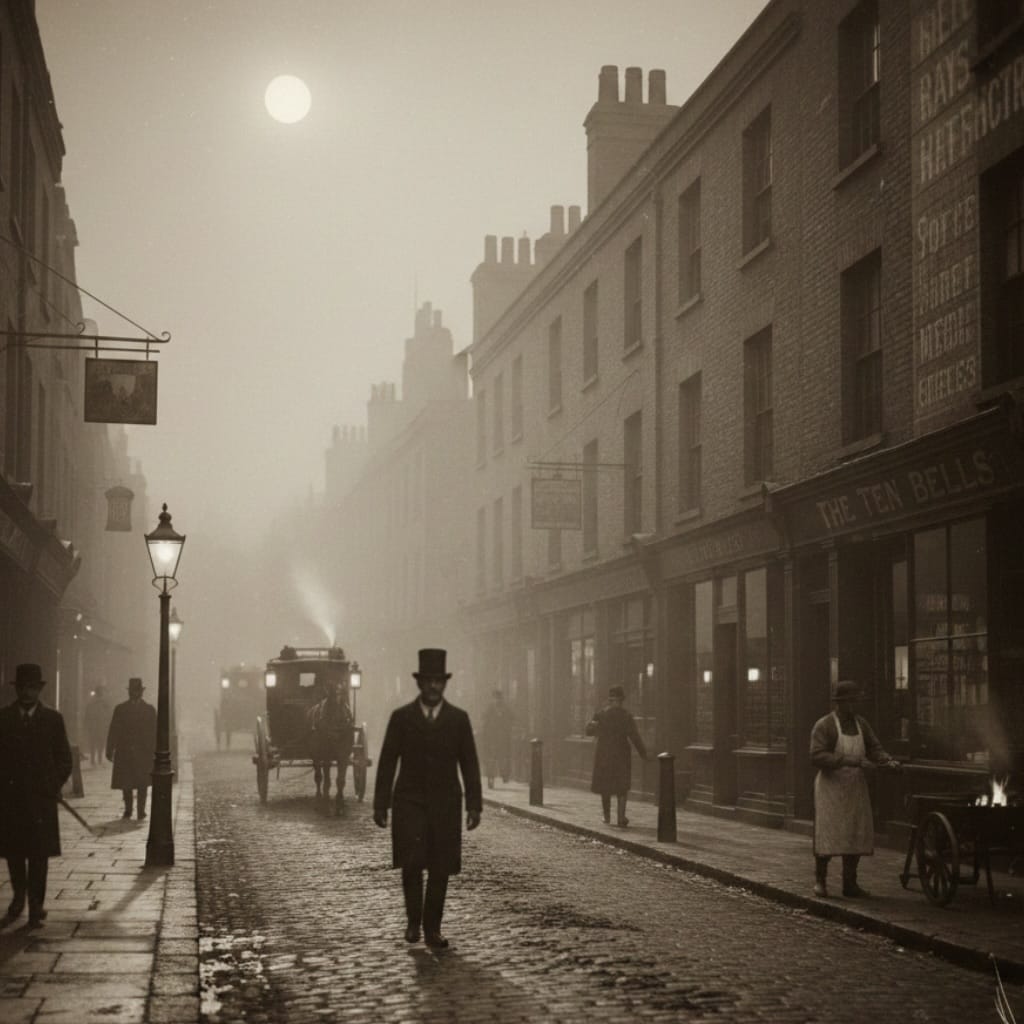
    Walking through Whitechapel in 1888, particularly after nightfall, was to enter a world of shadows and danger. The narrow courts and alleyways were lit only by gas lamps, which cast pools of dim, flickering light that barely penetrated the gloom. Dense fog – the famous London “pea-soupers” caused by coal smoke mixing with moisture – could reduce visibility to just a few feet.

    The layout of the streets themselves aided concealment. Whitechapel was a maze of interconnected passages, yards, and courts. Many thoroughfares had multiple entrances and exits, allowing someone to disappear quickly. The murder sites chosen by Jack the Ripper – Buck’s Row, Hanbury Street, Berner Street, Mitre Square, and Miller’s Court – were all secluded spots where a crime could be committed with minimal risk of observation.

    Police patrols were stretched thin. Beat constables walked regular, timed routes, and local criminals knew exactly when officers would pass. There were even parts of Whitechapel that police were reluctant to enter at all.

    A Community of Immigrants

    Whitechapel in 1888 was one of the most diverse areas of London. The district had long been a first stopping point for immigrants arriving in Britain, and by the late Victorian era, its population was a complex mix of nationalities and cultures.

    The largest immigrant community was Jewish, fleeing persecution in Eastern Europe and Russia. Thousands of Jewish refugees had settled in Whitechapel, establishing tailoring workshops, synagogues, and a vibrant Yiddish-speaking culture. By 1888, the Jewish community dominated much of the local tailoring industry.

    This diversity contributed to social tensions. Anti-immigrant sentiment was common, and when the Ripper murders began, suspicion quickly fell on “foreigners.” A man known as “Leather Apron” became an early suspect, and the press reported that he was a Jewish bootmaker. When graffiti reading “The Juwes are the men that will not be blamed for nothing” was found near one murder scene, police hastily erased it, fearing it would spark anti-Jewish riots.

    Prostitution and Survival

    In October 1888, the Metropolitan Police estimated that there were approximately 1,200 prostitutes “of very low class” working in Whitechapel, along with 62 brothels. These figures were almost certainly underestimates.

    For many women in Whitechapel, prostitution was not a choice but a necessity. With few employment options available, and those that existed – such as matchbox making or sewing – paying starvation wages, selling sex was often the only way to afford food and lodging. A woman might earn threepence for an encounter – just enough for a bed and perhaps a drink to dull the misery of her circumstances.

    All five of the Ripper’s canonical victims had, at various times, worked as prostitutes. They ranged in age from 25 to 47, and all struggled with alcohol dependency – a common means of coping with the harsh realities of life in the East End. The heavy drinking and rough living aged these women prematurely; contemporary accounts describe women in their forties looking decades older.

    The Pubs and Music Halls

    Despite the grinding poverty, Whitechapel was not without its entertainments. Public houses stood on almost every corner, offering cheap gin and beer to those seeking escape from their daily struggles. The Ten Bells pub on Commercial Street, which still stands today, was frequented by several of the Ripper’s victims.

    Music halls provided another form of escape, offering variety shows, comedy acts, and popular songs. For a few pennies, working-class Londoners could forget their troubles for an evening. The area around Whitechapel Road was home to several such establishments, their bright lights and raucous laughter providing a stark contrast to the darkness of the surrounding streets.

    When Terror Gripped the Streets

    The Jack the Ripper murders, which occurred between August and November 1888, sent shockwaves through Whitechapel and beyond. The brutal nature of the crimes – victims found with their throats cut and their bodies mutilated – created a atmosphere of genuine terror.

    Women were afraid to walk the streets alone. Vigilance committees were formed by local residents determined to catch the killer. The press coverage was unprecedented, with newspapers across the country and around the world reporting on every development. Letters poured in to Scotland Yard and the press, many from people claiming to be the murderer.

    It was this intense media attention that transformed a series of local murders into an international phenomenon. The name “Jack the Ripper” – coined in a letter received by the Central News Agency, likely written by a journalist rather than the killer – gave the unknown murderer a identity that would endure for more than a century.

    A Catalyst for Change

    The Whitechapel murders had an unexpected consequence: they forced affluent Victorian society to confront the appalling conditions in which the East End poor lived. Journalists who came to report on the crimes found themselves writing about the poverty, overcrowding, and social neglect they witnessed.

    George Bernard Shaw, writing to The Star newspaper in September 1888, noted with bitter irony: “Whilst we conventional Social Democrats were wasting our time on education, agitation and organisation, some independent genius has taken the matter in hand, and by simply murdering and disembowelling… women, converted the proprietary press to an inept sort of communism.”

    In the years following the murders, Parliament passed legislation including the Housing of the Working Classes Act 1890, which set minimum standards for accommodation. Slum clearance programmes began, and gradually the worst of Whitechapel’s rookeries were demolished.

    Whitechapel Today

    Walking through Whitechapel today, it can be difficult to imagine the squalor and desperation of 1888. The slums have long since been replaced by modern buildings, and the area has undergone waves of regeneration. Yet traces of the Victorian East End remain.

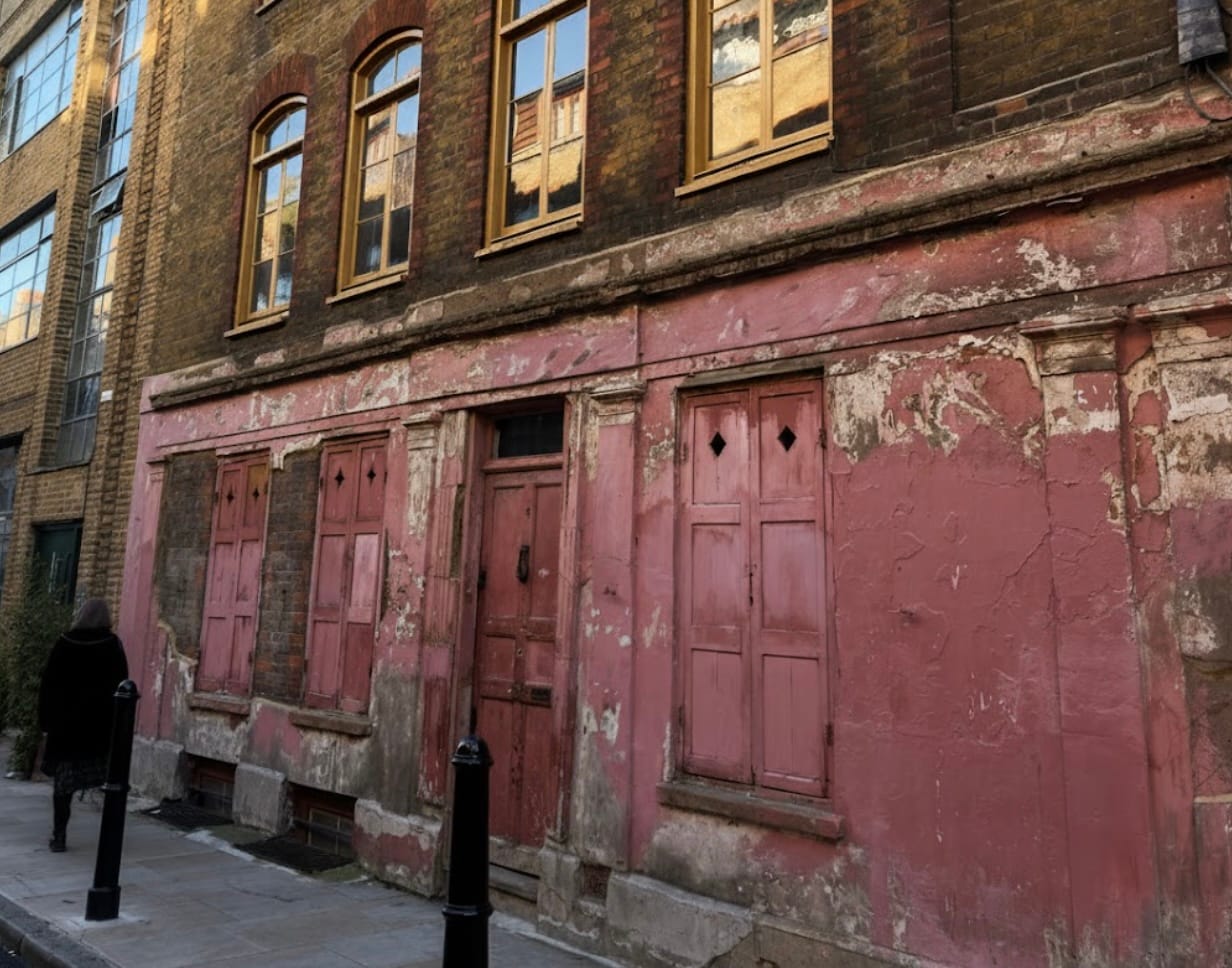
    Some of the streets the Ripper walked still exist, though often under different names – Buck’s Row is now Durward Street, and Berner Street has become Henriques Street. Victorian buildings survive here and there, their weathered brickwork a tangible link to the past. The Ten Bells pub still serves customers, and Christ Church Spitalfields still towers over the area as it did in 1888.

    The best way to understand what Whitechapel was really like in 1888 is to walk its streets with an expert guide who can point out what remains and help you visualise what has been lost. Standing in the quiet courtyards and narrow passages where the murders occurred, it becomes possible to glimpse the world that Jack the Ripper and his victims inhabited – a world of shadows, poverty, and fear that still has the power to fascinate and horrify us more than 130 years later.

    Experience Victorian Whitechapel for Yourself

    Our Jack the Ripper walking tour takes you through the streets and alleyways where these infamous crimes took place. Led by expert guides, you’ll visit the actual murder sites, see surviving Victorian architecture, and gain a deeper understanding of life in 1888 Whitechapel. It’s not just a tour about murder – it’s a journey into a vanished world.

    Frequently Asked Questions

    How poor was Whitechapel in 1888?

    Whitechapel was one of the most impoverished areas in Victorian London. Charles Booth’s poverty maps marked much of the district as “very poor” or “semi-criminal.” Many residents lived in overcrowded lodging houses, paying fourpence a night for a bed. The poverty was so severe that contemporary observers compared it unfavourably to slums in Russia and New York.

    Why did Jack the Ripper choose Whitechapel?

    Whitechapel’s maze-like streets, poor lighting, stretched police resources, and vulnerable population of women working as prostitutes made it an ideal hunting ground. The area’s numerous courts and alleyways provided concealment, while poverty meant potential victims were often out on the streets late at night seeking to earn money for lodgings.

    What was Dorset Street like in 1888?

    Dorset Street was known as “the worst street in London.” It was home to numerous lodging houses and was a centre of prostitution and crime. Mary Jane Kelly, the Ripper’s final victim, lived in a small room in Miller’s Court, just off Dorset Street. The street was later demolished as part of slum clearance programmes.

    Can you still see Victorian Whitechapel today?

    While much of Victorian Whitechapel has been rebuilt, some original features survive. Several streets still follow their 1888 routes (though often renamed), Victorian buildings remain scattered throughout the area, and landmarks like Christ Church Spitalfields and the Ten Bells pub still stand. A guided walking tour is the best way to discover these surviving traces of the past.

  • The Ten Bells Pub: London’s Most Infamous Jack the Ripper Connection

    The Ten Bells Pub: London’s Most Infamous Jack the Ripper Connection

    Standing on the corner of Commercial Street and Fournier Street in Spitalfields, the Ten Bells pub has poured pints for over 270 years. But it’s not the Victorian tiles or the craft beer selection that draws visitors from around the world. It’s the pub’s chilling connection to Jack the Ripper and at least two of his victims during the Autumn of Terror in 1888.

    If you’re planning a Jack the Ripper tour in London, understanding the significance of this Grade II listed building adds a haunting layer to your experience.


    A Brief History of the Ten Bells

    The Ten Bells predates the Ripper by more than a century. Records show a pub on this spot since at least 1752, though it was originally called the Eight Bells after the chimes in the neighbouring Christ Church, Spitalfields — the striking Nicholas Hawksmoor-designed church that still looms over the pub today.

    When the church installed a new set of ten bells in 1788, the pub followed suit with its name. The original building was demolished in 1851 when Commercial Street was cut through the area, and the pub was rebuilt just a few metres from its original location. This is the building you can visit today.

    What makes the Ten Bells architecturally significant is its remarkably preserved Victorian interior. Floor-to-ceiling ceramic tiles in striking blue and white patterns cover two walls, and a magnificent painted tile mural titled Spitalfields in ye Olden Time – Visiting a Weaver’s Shop dominates the north wall. Created by W.B. Simpson & Sons in the late 19th century, it depicts the area’s Huguenot silk-weaving heritage.


    The Jack the Ripper Connection

    The Ten Bells’ dark claim to fame lies in its links to the Whitechapel murders of 1888. At least two of the five canonical victims had documented connections to this pub.

    Mary Jane Kelly

    The most significant connection is to Mary Jane Kelly, the Ripper’s fifth and final canonical victim. Kelly, a 25-year-old described as having “a fair complexion, light hair and rather attractive features,” used the pavement directly outside the Ten Bells as her regular pitch to attract clients.

    According to witness Elizabeth Foster, she was drinking with Mary Kelly inside the Ten Bells on the evening of 8th November 1888. Kelly left the pub that night and was murdered in the early hours of 9th November. Her horrifically mutilated body was discovered that morning in her single room at 13 Miller’s Court, Dorset Street — directly across the road from where the Ten Bells stands.

    A retired market porter named Dennis Barrett, interviewed years later by author Tom Cullen, remembered Kelly from his childhood: “She had her pitch outside the Ten Bells Pub in Commercial Street, and woe to any woman who tried to poach her territory. Such a woman was likely to have her hair pulled out in fistfuls.”

    When you stand outside the entrance to the Ten Bells today, you are quite literally standing in Mary Kelly’s footsteps.


    Annie Chapman

    The second canonical victim linked to the Ten Bells is Annie Chapman. Contemporary newspaper reports stated she was seen drinking alone in “a pub near Spitalfields Market” at around 5am on the morning of 8th September 1888, just hours before her body was discovered in the backyard of 29 Hanbury Street.

    Given the Ten Bells sits directly across from Spitalfields Market and was the most prominent pub in the immediate area, historians believe this was almost certainly where Chapman had her final drink. The murder site on Hanbury Street is just a short walk from the pub’s front door.

    Did the Ripper Himself Drink Here?

    Some Ripperologists have speculated that Jack the Ripper himself may have visited the Ten Bells. The pub sits just a short walk from Flower & Dean Street — now demolished, but in 1888 it was a notorious slum that modern analytical techniques have suggested as the most likely base of operations for the killer.

    Whether the Ripper came here to warm himself against the cold during his nocturnal wanderings, or to identify his victims, remains one of the many unanswered questions of the case.

    When the Pub Was Called “Jack the Ripper”

    In 1976, a landlord hoping to capitalise on the pub’s macabre history renamed it “The Jack the Ripper.” The interior was redecorated with display cases containing memorabilia and information about the Whitechapel murders, and the venue leaned heavily into its dark tourism appeal.

    The name change proved controversial. A sustained campaign by the Reclaim the Night movement argued that naming a pub after a murderer of women was inappropriate and glorified violence against women. The campaign succeeded, and in 1988 — exactly 100 years after the murders — the brewery restored the original Ten Bells name.

    When the Ripper-themed décor and disco lighting were stripped away during the 1980s, the pub’s stunning Victorian interior emerged intact underneath, having been preserved by the garish overlay.

    The Ten Bells in Popular Culture

    The pub’s Ripper connections have made it a fixture in books, films, and television about the case.

    Most notably, the Ten Bells features in Alan Moore and Eddie Campbell’s acclaimed graphic novel From Hell (1999) and its 2001 film adaptation starring Johnny Depp. In the film, Depp’s Inspector Abberline shares a drink with Mary Kelly (played by Heather Graham) inside the pub. However, the building shown on screen was an on-set recreation rather than the real Ten Bells.

    In a quirky footnote, celebrity chef Jamie Oliver featured the pub in his series Jamie’s Great Britain in 2011. His great-great-grandfather was apparently a landlord of the Ten Bells during the 1880s — meaning Oliver’s ancestor may have served drinks to the Ripper’s victims.

    Visiting the Ten Bells Today

    The Ten Bells remains a fully functioning pub and is well worth a visit, whether you’re interested in the Ripper history or simply appreciate a characterful East End boozer.

    Address: 84 Commercial Street, London E1 6LY

    Nearest stations: Liverpool Street (5 minutes walk), Aldgate East

    Opening hours: Daily from 12pm (closes midnight Sunday-Wednesday, 1am Thursday-Saturday)

    What to look for:

    • The original Victorian ceramic wall tiles in blue and white patterns
    • The painted tile mural Spitalfields in ye Olden Time depicting 18th century Spitalfields
    • The companion mural Spitalfields in Modern Times (added in 2010) featuring local artists Gilbert & George
    • The faded Truman’s Beers signage on the exterior
    • The view across to Christ Church Spitalfields

    The pub serves a range of craft beers, cocktails, and has an upstairs cocktail bar. Note that under-18s are not permitted, and the pub operates card payments only.

    Experience the Full Story on a Jack the Ripper Tour

    The Ten Bells is just one landmark in the story of Jack the Ripper. To truly understand the context of the murders — the desperate poverty of Victorian Whitechapel, the gas-lit alleyways where the crimes occurred, and the panic that gripped London during the Autumn of Terror — join us on our Jack the Ripper walking tour.

    Our expert guides will take you through the murder sites, share the evidence, and let you draw your own conclusions about history’s most infamous unsolved mystery. Many of our evening tours end at or near the Ten Bells, giving you the perfect opportunity to raise a glass to the victims and reflect on the dark history you’ve just walked through.

    Book your Jack the Ripper tour today


    Planning your visit? The Ten Bells gets busy on weekends, particularly with the nearby Spitalfields Market drawing crowds on Sundays. For a more atmospheric experience, visit on a weekday evening when the candlelit interior and quieter atmosphere better evoke the pub’s Victorian past.